
Last updated November 24, 2026
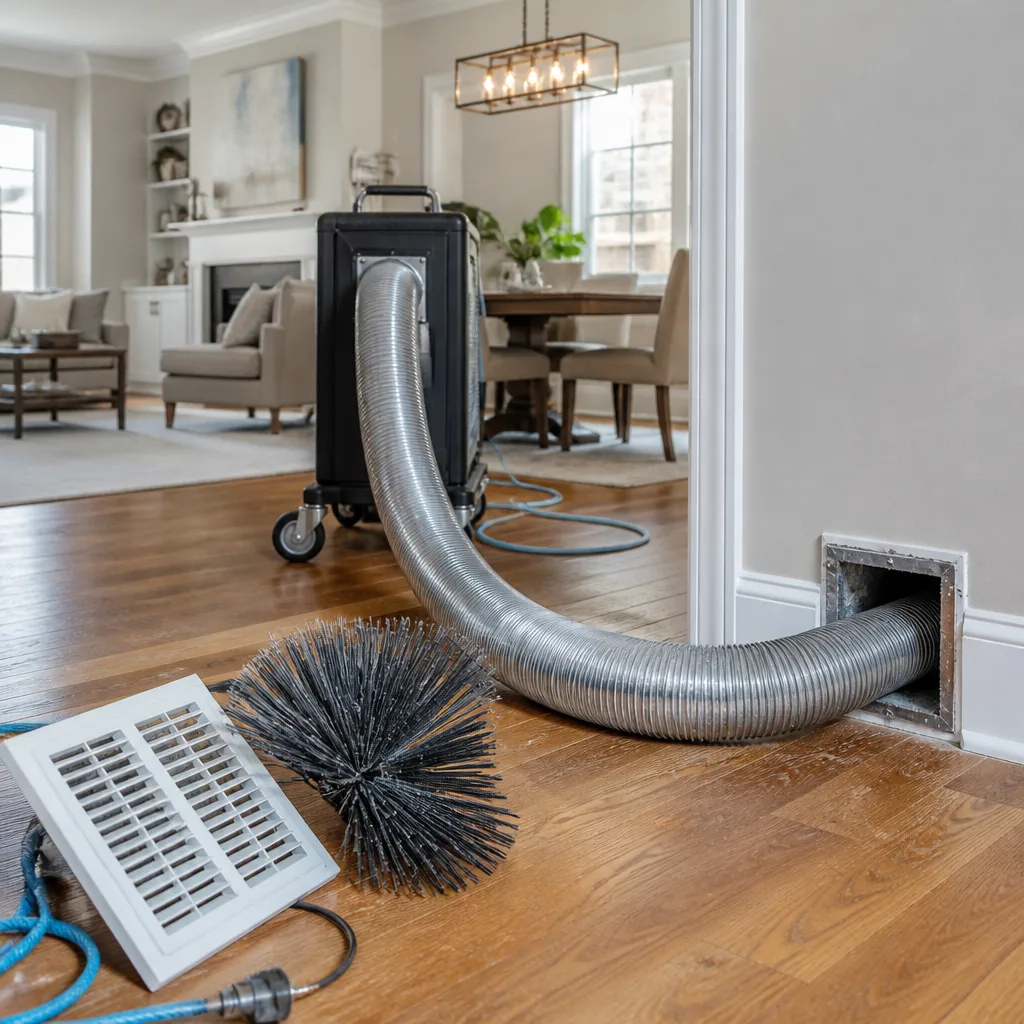 Whole-home duct cleaning
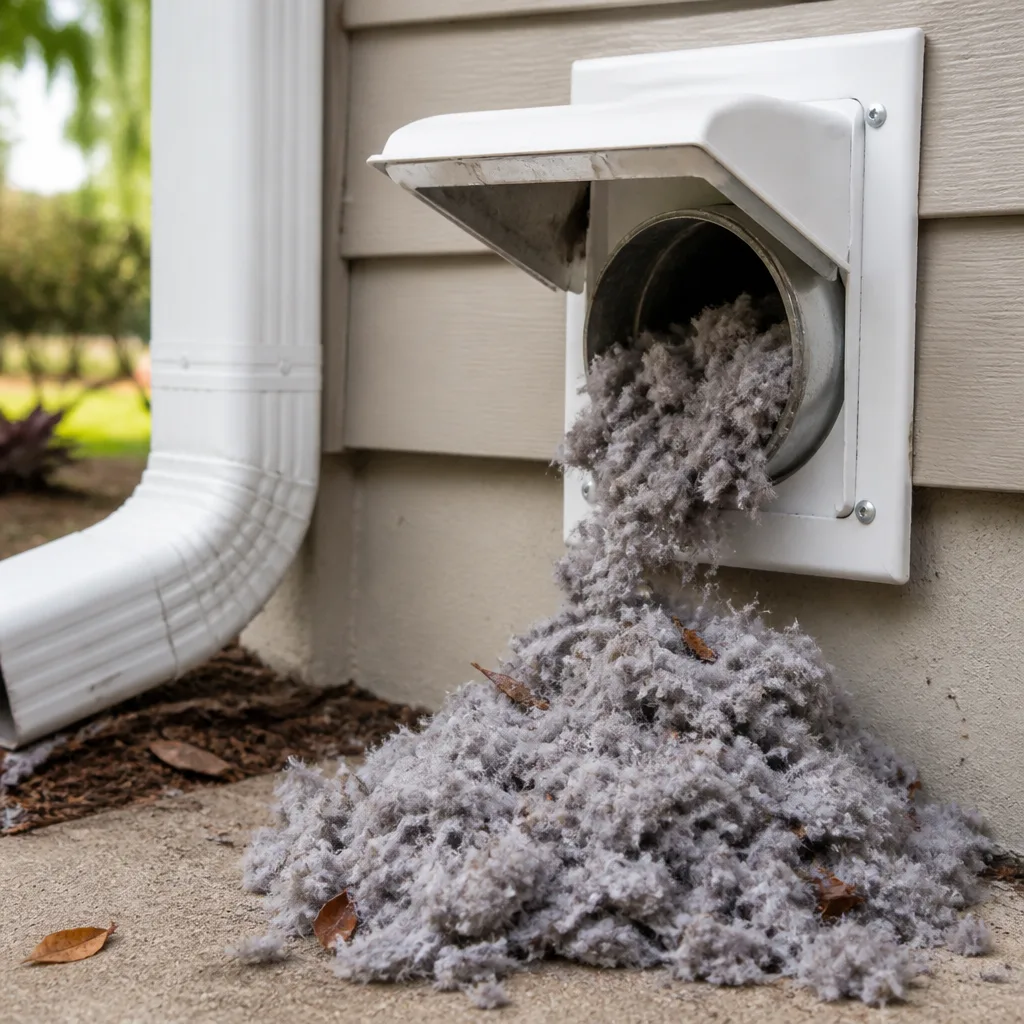 Dryer vent cleaning
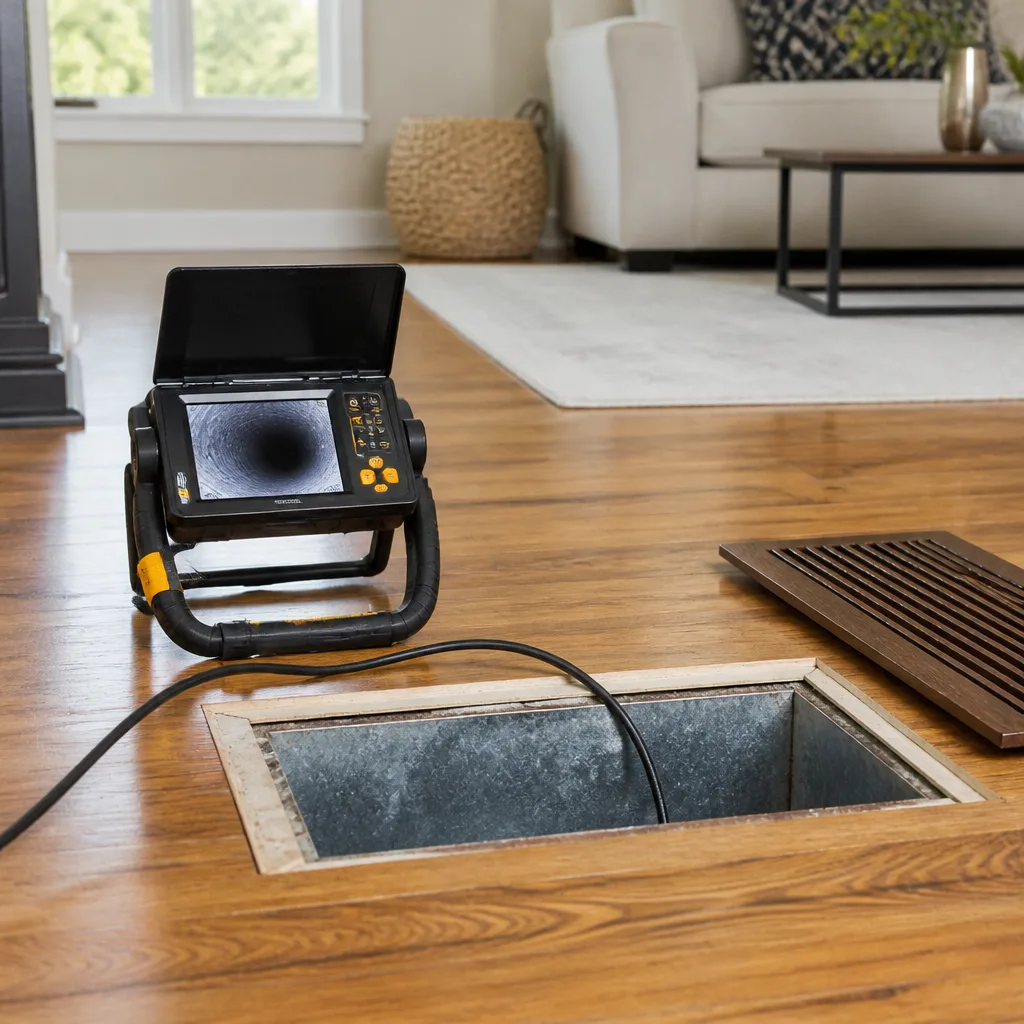 Camera inspection
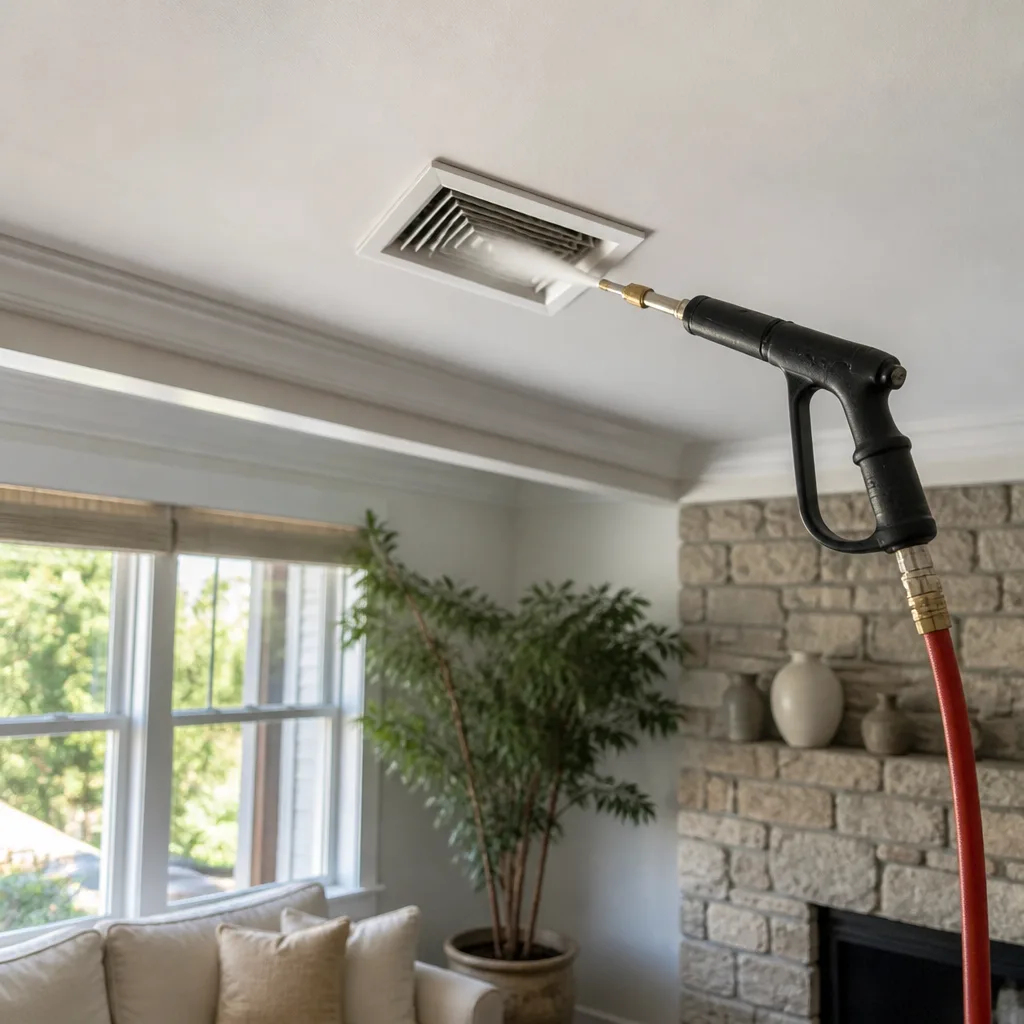 Sanitizing & deodorizing
Whole-system duct and dryer vent check with before-and-after photos - you see exactly what came out of your vents
That "$99 whole-house special" is a bait ad - the real number appears once they are in your hallway, or the "clean" is a shop-vac at the register. We photograph the inside of your ducts before and after instead.
DIY vs Professional Air Duct Cleaning: The Provo Homeowner’s Decision Guide
The most dangerous move in home duct cleaning isn’t skipping the blower wheel. It’s the leaf blower trick, the one where a homeowner removes a register, jams a blower nozzle into the opening, and “blows out” the system. That technique films well and spreads contamination from one zone to every room in the house at the same time. It’s the opposite of cleaning. If you’re weighing a weekend project against a professional job here in Provo, this guide explains the physics, the costs, the legitimate DIY jobs, and the point where doing it yourself makes the professional work harder and pricier. You’ll finish knowing exactly where your line should sit.
Quick Answer
Professional duct cleaning removes contamination; most DIY attempts relocate it. Duct cleaning depends on negative pressure, a sustained high-CFM vacuum sealed to the system that collects debris instead of releasing it, and consumer vacuums and blower tricks can’t reach those airflow rates. You can safely handle register wiping, filter changes, lint trap clearing, and visual inspection yourself, but anything past the register face should go to a company running commercial equipment like a Rotobrush or Nikro system.
Styles & brands we work with
- Whole-home duct cleaning
- Dryer vent cleaning
- Camera inspection
- Sanitizing & deodorizing
Table of Contents
- What Is Negative Pressure Cleaning, and Why Does It Decide Everything?
- Why CFM Ratings Matter More Than Equipment Brand
- What You Can Legitimately DIY (and Do Well)
- When DIY Makes the Professional Job More Expensive
- The Real Cost of a DIY Attempt in Provo
- How to Tell If a Previous DIY Attempt Left Contamination Behind
- What Makes Provo Ductwork Its Own Case
- How to Choose a Professional in Provo
What Is Negative Pressure Cleaning, and Why Does It Decide Everything?
Negative pressure cleaning means the vacuum pulls air through the duct system so that every loose particle travels toward the collection point instead of into your living space. The machine connects to the main trunk, seals around it, and creates suction strong enough that the whole duct run behaves like one sealed path. A technician then agitates debris from the inside with a rotary brush or air whip, and the suction carries it out. The debris goes into a HEPA-rated collection system, not into the air in your hallway.
That’s what containment and collection mean in the NADCA standards for the trade. Two ideas, one job. Containment means the work area and the system openings stay sealed so nothing escapes. Collection means the removed material ends up in a filter or collection bag, not on your floor or floating through the kitchen. Without both, cleaning is theater.
Here’s the part that matters for the DIY question. Agitation without suction is redistribution. If you brush or blow dust loose inside a duct but nothing is pulling that dust into a sealed collection point, the particles go somewhere else. Some settle further down the line. Some push out of supply registers into rooms. Some drift back through the return. You’ve moved dust from a box into your air, which is exactly the outcome you were trying to prevent. That’s why the difference between a real job and a DIY attempt comes down to whether the system is under suction while the agitation happens, and consumer equipment almost never is.
Why CFM Ratings Matter More Than Equipment Brand
CFM stands for cubic feet per minute, the measure of how much air a vacuum moves. It’s the number that separates a real duct cleaning from a hopeful one. A shop vacuum in the 100 CFM range moves a small amount of air through a narrow hose. A truck-mounted cleaning unit or a high-output commercial system pushes past 2,000 CFM. That’s roughly a twentyfold difference in airflow, and airflow is what lifts debris off duct walls and carries it away.
Think about it in terms of air velocity inside the duct. Suction is only useful if it’s fast enough to keep particles airborne until they reach the collection point. A weak vacuum drops the pressure just enough to loosen dust but not enough to transport it. The dust lifts, drifts, and settles where it started. A high-CFM unit keeps the whole run moving.
Equipment quality matters too, but for a supporting reason. Professional-grade systems are built to run under continuous load and hold their airflow. The Provo Air Duct Cleaning team runs Rotobrush rotary brush systems for the mechanical agitation side and Nikro HEPA-rated vacuums for containment-grade collection. Abatement Technologies air filtration gear, the same category used in remediation and restoration work, rounds out the equipment for jobs with heavier particulate loads. Consumer tools aren’t built for any of that and weren’t meant to be.
- Shop vacuum: around 100 CFM, narrow hose, tiny collection bag, no seal to the duct system.
- Leaf blower trick: high volume into the wrong end, zero containment, microbial contamination spread to every zone.
- Rotobrush rotary brush: agitates the full duct interior while a sealed vacuum collects the debris.
- Nikro HEPA vacuum: rated for containment so collected material stays collected.
- High-CFM commercial unit: 2,000+ CFM, which is the airflow range that actually moves settled debris out of the system.
What You Can Legitimately DIY (and Do Well)
Some of this work belongs in your hands, and doing it well makes the professional job easier. The safe list starts at the register and stops at the duct face. Anything you can reach with a cloth, a screwdriver, or a new filter is fair game.
- Clean the register covers. Pop them off, wash them in the sink, dry them fully, and put them back. Dust and lint collect on the grille face and around the supply openings, and wiping them down removes a visible layer of contamination before it ever gets into the house behind them.
- Replace your air filter on schedule. This is the highest-value DIY job in the whole system. A loaded filter chokes airflow and drives up energy use, and swapping it is a two-minute task. Follow the filter rating your system’s manufacturer recommends.
- Clear the dryer vent lint trap and the vent line you can reach. Pull the lint screen every load. Disconnect the flexible transition hose behind the dryer and clear any compacted lint, which is a recognized fire risk, not just a maintenance item. You’ll find our dryer vent cleaning page useful for understanding the full-length ducting a technician reaches.
- Do a visual inspection of accessible flex duct. In a basement or crawlspace, you can see the flexible duct runs. Look for sagging, kinked, or crushed sections, and check that joints are taped or strapped rather than hanging loose. Note what you find; it helps when a technician inspects later.
- Keep return grilles clear. Move furniture and boxes away from returns so the system can breathe.
That list is the honest boundary. It’s real work with real value, and it doesn’t require any equipment beyond a screwdriver, a vacuum, and a filter. Past that boundary, the physics of the system work against you.
When DIY Makes the Professional Job More Expensive
A common assumption is that a failed DIY attempt just costs you time, then the professional comes in and fixes it. In practice, some DIY moves damage components or spread contamination in ways that add repair scope to the cleaning job. The three most expensive ones share a pattern: they disturb the system without containing anything.
Disturbed mold. If microbial growth is present on duct surfaces, agitation without sealed collection aerosolizes spores and pushes them through the system into occupied rooms. A professional job deals with that load using a HEPA-rated vacuum and filtration equipment set up to contain it. A homeowner with a brush and a shop vac releases it. After that spread, the cleaning scope may grow to include sanitizing the full air pathway, not just removing dust.
Punctured flex duct. Flexible duct is thin and easy to tear. A rotary brush run without control, or a homemade probe shoved into a branch, can puncture the inner liner. A torn liner means air leaks and unfiltered air gets pulled into the system, which is a comfort and air-quality problem the cleaning didn’t cause. Now the job includes duct repair and sealing, not just cleaning.
Damaged dampers from probe insertion. Dampers are the adjustable vanes inside branch ducts that balance airflow between rooms. Homeowners hunting for a draft or a hot room sometimes reach in with a rod or a camera wand to feel around. Dampers bend, jam, or break loose. Repairing one is more involved than cleaning around it, and a jammed damper throws off balance in rooms that were fine before.
There’s a fourth cost that shows up on the invoice more often: contamination spread into rooms the system serves. Once dust lands on furniture, carpets, and surfaces through supply registers, the cleanup isn’t duct work anymore. That’s the leaf-blower problem in miniature, and it’s the reason a professional job’s containment setup isn’t theater. For a look at what cleaning covers when the system gets assessed, see our air duct cleaning overview.
The Real Cost of a DIY Attempt in Provo
Run the numbers the way you’d run any home project: hours, materials, rental, and risk. A DIY duct cleaning attempt isn’t free, and the parts you can’t do with home equipment are exactly the parts that matter. Here’s the honest comparison for a Provo homeowner weighing a weekend of work against a professional estimate.
- Your time: a full register-and-filter pass is a couple of hours. A serious attempt at branch-line cleaning with rented equipment typically eats a full day or more, and you won’t get the main trunk.
- Equipment rental: renting an air mover or a high-capacity vacuum runs store rental rates, and the gear still lacks duct-sized hose connections and sealed collection.
- Consumables: filters, tape, gloves, cleaning solution, and replacement register hardware add up quickly.
- Risk of damage: punctured flex duct, a bent damper, or a scraped transition joint each turns cleaning into repair.
- Risk of spread: agitation without suction puts contamination into the air, not into a filter.
- Professional estimate: free, in writing, scoped to your system, at a per-job price agreed before work starts.
That last line is the one to weigh against everything above. The professional route gives you a fixed, agreed price for the result you actually want, and the DIY route gives you a day of labor and a partial outcome with real downside risk. The math usually favors the estimate once you count the hours and the odds of a repair. We’d rather you know that before you rent a machine.
Below the duct question sits a related one: system efficiency. A clogged or dirty system makes the HVAC equipment work harder, and filters, coils, and blower assemblies all share the same air path. Our HVAC cleaning service covers the equipment side of that path alongside the ducts.
How to Tell If a Previous DIY Attempt Left Contamination Behind
A technician looks for a specific set of clues before starting a professional clean, and many of them point to an earlier attempt that went sideways. If you’ve tried this yourself, or you bought a house where a previous owner did, here’s what to watch for.
- Dust patterns that don’t match the rooms. Low-traffic rooms showing heavy dust while busy rooms stay cleaner than usual can signal dust redistributed unevenly through supply registers.
- Fresh dust on horizontal surfaces near registers. A thin film that reappears shortly after cleaning, especially near supply openings, suggests debris is still moving through the system.
- Loose or missing register hardware. Bent screws, popped clips, or covers that don’t sit flush hint that someone has been in and out repeatedly.
- Visible tears, kinks, or tape failures on flex duct. Punctures and crushed runs in accessible duct indicate the system has taken a beating.
- Uneven airflow between rooms. A room that used to heat or cool fine but now runs hot or cold often points to a disturbed damper.
- An odor that shows up when the system runs. A musty smell early in a heating or cooling cycle, especially after an attempt to clean the ducts, can mean disturbed growth was spread rather than removed.
None of those signs is a guarantee, and none is a diagnosis you can make from a hallway. They’re the kind of details a proper inspection checks for. The value is knowing what questions to ask when you book.
What Makes Provo Ductwork Its Own Case
Provo sits in a valley with a distinctive set of conditions that affect what’s in your ducts. Utah Valley’s inversions trap particulate matter close to the ground through the winter, and dust from spring winds and nearby foothills finds its way into homes. Houses run their heating systems heavily through cold months, which pushes a lot of air through the same ductwork day after day. Drier air through the heating season also lifts more dust into circulation. The result is that Provo homes tend to accumulate particulate matter faster than a coastal or humid-climate home with similar square footage.
Housing stock matters too. Provo has a mix of older homes with retrofitted ductwork and newer builds with longer flex runs and more complex systems. Renovation is common across the city, and drywall dust, sawdust, and construction debris end up in ducts when returns run during a remodel. Post-renovation cleaning is one of the most common reasons people call us in Provo.
Each of those conditions makes the containment part of the job more important, not less. In a home with heavy winter dust loads and inversion-season particulate, an agitation approach without suction just moves that load into the breathing zone. If you’re in Provo and your ducts have been sitting for a while, that’s the reason to make the call rather than take another shot at it yourself.
How to Choose a Professional in Provo
Once you’ve decided to book, the next question is how to tell a real job from a cheap one. The industry has a bait-and-switch reputation for a reason: a low coupon price that balloons once the technician is on site. Knowing what to ask lets you skip that whole experience.
- Ask for one flat price per system, in writing. A serious company quotes the whole system as one job, not a per-vent add-on. The written estimate should state the price before work starts.
- Ask about equipment. A company running a Rotobrush and a Nikro HEPA vacuum will tell you without hesitation, and those are tools that can hit the airflow and containment the job needs.
- Ask about scope. Cleaning, repair and sealing, sanitizing, and dryer vent service under one company means the whole air pathway gets handled instead of a piece of it.
- Ask for before-and-after photos of your own ducts. Photos of your system, not stock images, are the proof that the work happened.
- Ask about the satisfaction guarantee. A company that stands behind the job says so plainly.
- Expect a vetting standard. The local pro is licensed and insured as the state requires, and our role is to connect you with professionals who meet that standard.
Ask about upgrades too. Homes with allergy or asthma concerns often benefit from filtration products like Honeywell and Aprilaire systems, and Guardsman protection products round out the natural upgrade path after a clean. A company that works with those brands can have the conversation in one visit. That’s the difference between a duct cleaner and an indoor air quality specialist, and it’s the reason we brought Provo Air Duct Cleaning into this guide at all.
Common Mistakes to Avoid
- Blowing out the registers with a leaf blower. It spreads debris from one zone into every room the system serves, and it’s the single most counterproductive thing a homeowner can do inside a duct system.
- Running a shop vacuum without a seal. A consumer vacuum at roughly 100 CFM can’t move enough air to lift settled debris, so it stirs the top layer and leaves the rest.
- Pushing rods into branch ducts to feel around. Dampers bend, liners tear, and the repair cost lands on you. Ask a technician for a proper inspection instead.
- Skipping the filter change and calling it cleaning. The filter is the single most important control point in the system, and a loaded one undoes everything else.
- Attempting duct access with an unsealed setup during a remodel. Drywall dust and construction debris in the air path after renovation needs containment, not a fan in the hallway.
- Signing off on a per-vent coupon price without a written total. The bait-and-switch starts with a low headline number and a missing written estimate.
- Assuming vents are the same thing as ducts. Registers, return grilles, trunk lines, branch runs, and the blower compartment are different components. Cleaning one of them doesn’t clean the air pathway.
See the difference
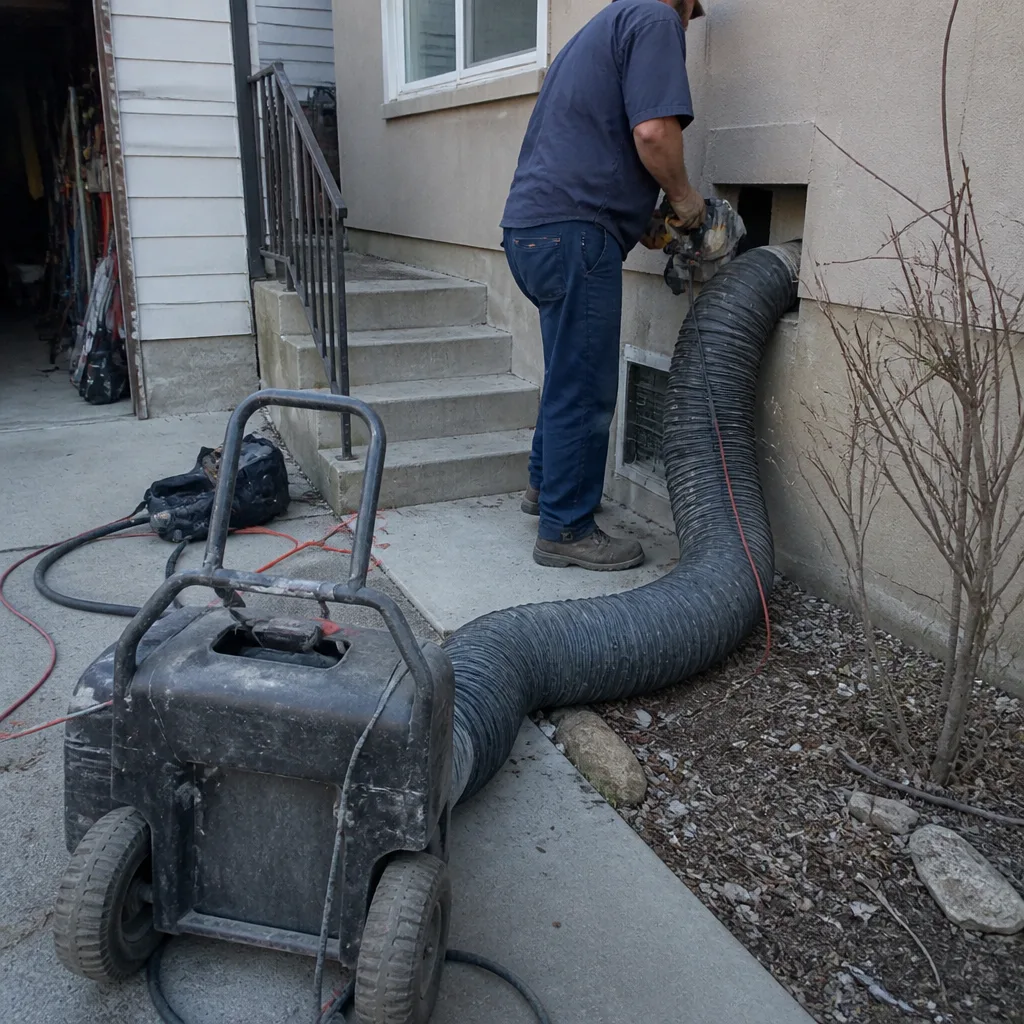 Before
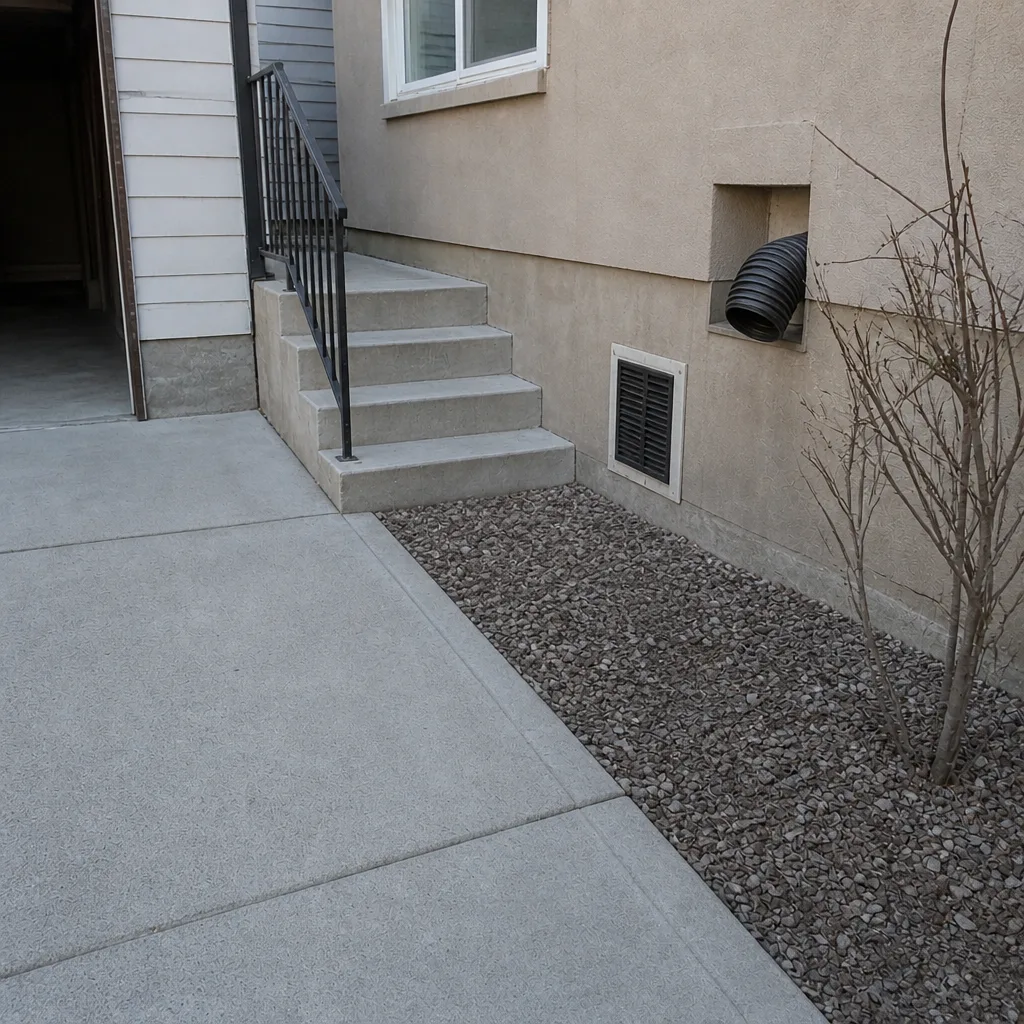 After
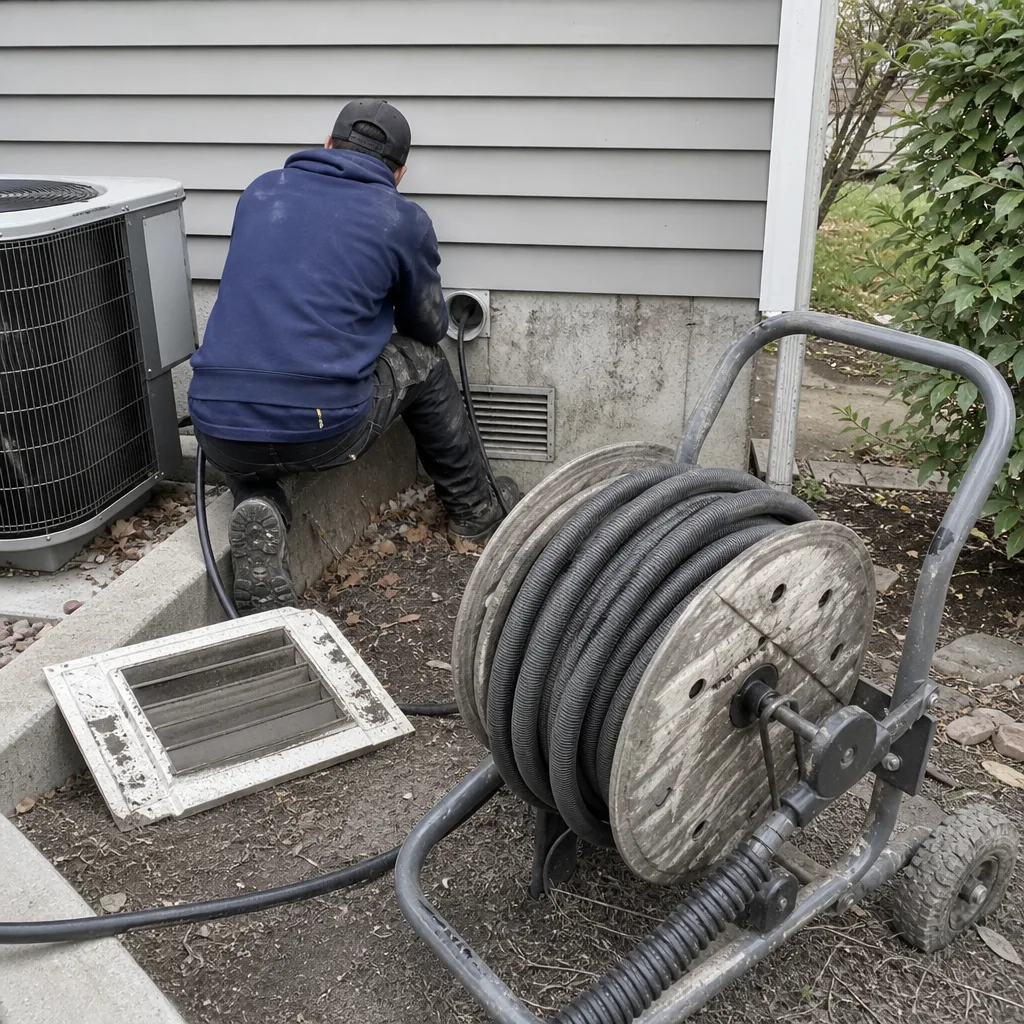 Before
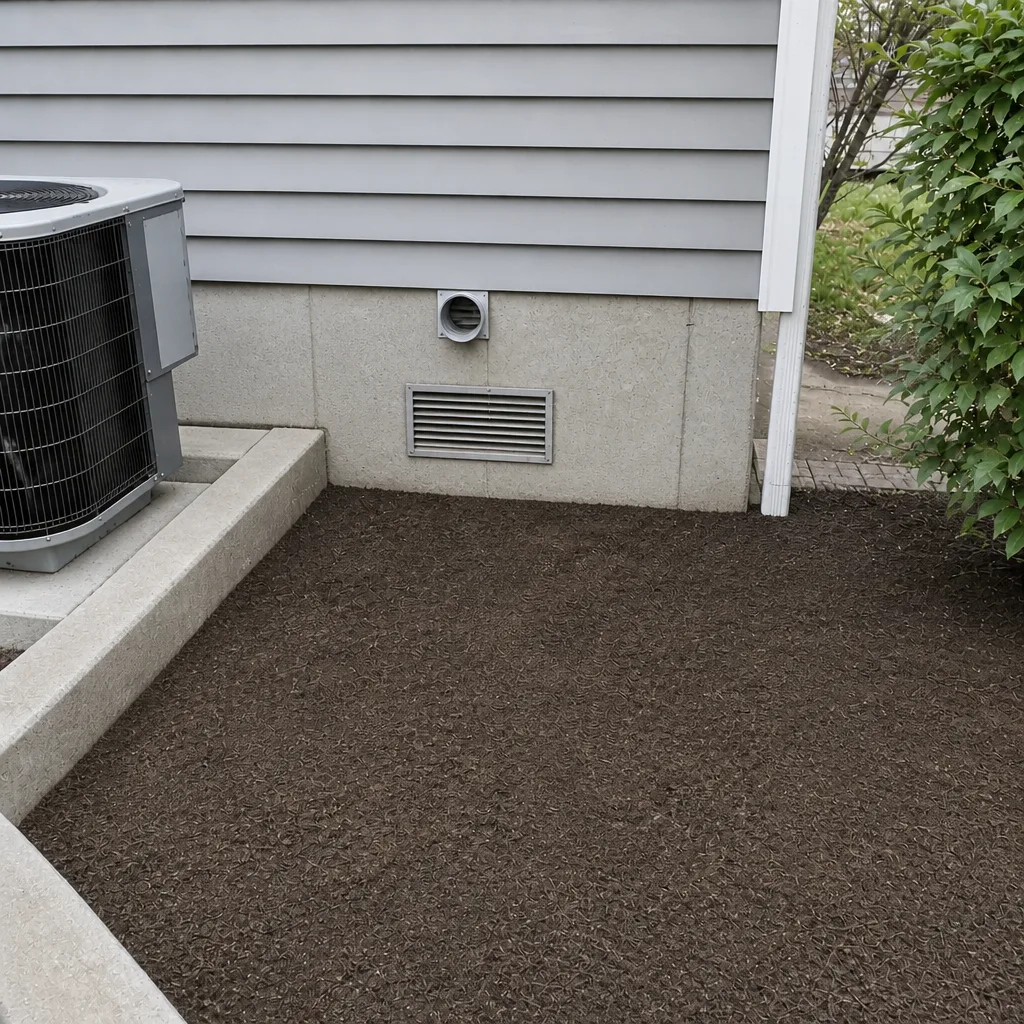 After
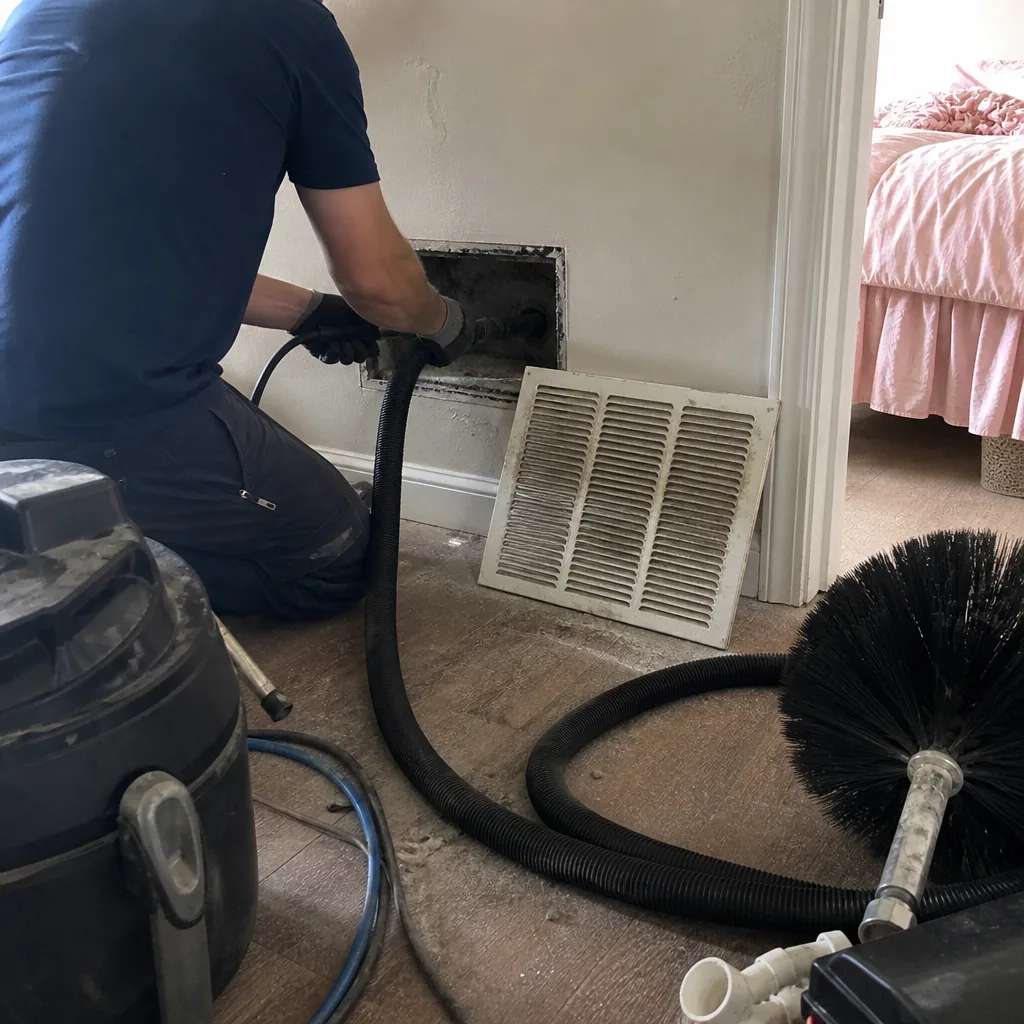 Before
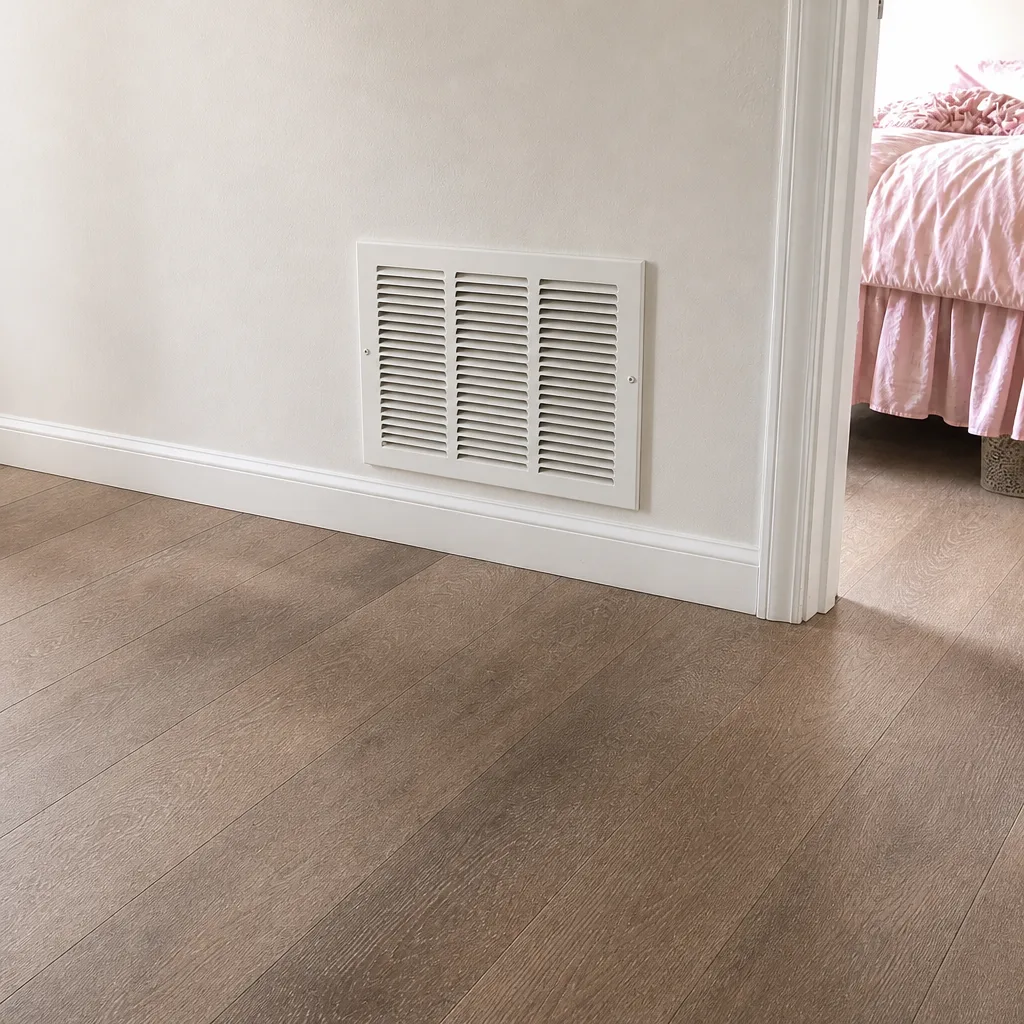 After
When to Call a Professional
Call a professional when the problem reaches past the register face. That means visible debris buildup inside duct openings, a musty odor that appears when the system runs, recent renovation dust, unexplained dust settling on surfaces throughout the house, or allergy and asthma symptoms that get worse indoors. A ramped-up dust load through a full heating season in Provo is another signal. It’s also time to call if you’ve already tried the DIY route and things aren’t better, because the diagnostic step matters more than a second attempt. Provo Air Duct Cleaning offers free estimates in Provo, and the local pro is licensed and insured as the state requires. Call (855) 658-4391. We answer 24/7. Fast dispatch from 7am to 7pm, Sunday through Friday. One flat price per system is agreed before work starts, and before-and-after photos of your own ducts are part of the job.
Frequently Asked Questions
Because consumer vacuums don’t move enough air to collect what a duct system holds. A shop vacuum at roughly 100 CFM can’t lift settled debris from an entire run, and without a sealed connection to the trunk, there’s no negative pressure path to carry the material out. Cleaning requires sustained high-CFM suction, which is what commercial systems built for the job provide. Call (855) 658-4391 for an exact quote. Estimates are free.
There’s no fixed interval that fits every home, but a few factors move the answer. Homes in Provo with heavy heating-season use, pets, recent renovation, or allergy-sensitive residents often benefit from an assessment sooner than a home with clean air history. If dust is building up faster than usual or odors show up when the system runs, that’s a signal to have it inspected rather than wait for a calendar date. Call (855) 658-4391 to schedule an assessment. Estimates are free.
Yes, for the parts that live at the register face. Wiping register covers, changing filters on schedule, clearing the dryer vent lint trap and the transition hose, and visually checking accessible flex duct are all reasonable and useful DIY jobs. What isn’t reasonable is trying to clean duct interiors with home equipment, because agitation without containment spreads contamination instead of removing it. Call (855) 658-4391 if you want an expert read on your system. Estimates are free.
We price per system by written estimate, and that estimate is free, so the honest answer is that the number depends on your system. Size, number of runs, access, and whether repair or sealing is needed all affect the total. What matters most is getting one flat price per system in writing before work starts, with no per-vent pricing and no coupon that balloons on site. Call (855) 658-4391 for an exact quote. Estimates are free.
Because a low headline price usually isn’t the whole price. Cheap quotes often come from operators using consumer-grade vacuums, quoting per vent, and adding charges once they’re on site. A quote built around a Rotobrush and Nikro-class system reflects a full containment job and a written total agreed in advance. Compare scope and equipment, not just the bottom line. Call (855) 658-4391 for an exact quote. Estimates are free.
Ask for before-and-after photos of your own ductwork, which a professional company provides without being pushed for them. A written estimate that matches the final invoice is the other signal. If a company can’t show you what changed inside your system, you don’t have proof, you have a promise. Call (855) 658-4391 to book a job you can verify. Estimates are free.
The Bottom Line
The DIY versus professional question isn’t about how hard you’re willing to work. It’s about negative pressure, and a home setup can’t generate enough of it to collect what a full duct system holds. You can clean registers, change filters, clear lint traps, and inspect flex duct yourself, and those habits are worth keeping. But duct interiors need commercial airflow, sealed containment, and equipment like the Rotobrush and Nikro systems a specialist brings, plus the repair and sealing capability to handle what an earlier attempt may have left behind. In Provo, with heavy winter heating loads and inversion-season particulate, that distinction matters. Book the estimate, get one flat price per system in writing, and keep the weekend for something easier.
Ready to stop guessing? Call Provo Air Duct Cleaning at (855) 658-4391. We answer 24/7. Fast dispatch from 7am to 7pm, Sunday through Friday. The estimate is free, the price is set per job by the written estimate, and the local pro is licensed and insured as the state requires.
Written by the team at Provo Air Duct Cleaning.