
Last updated November 24, 2026
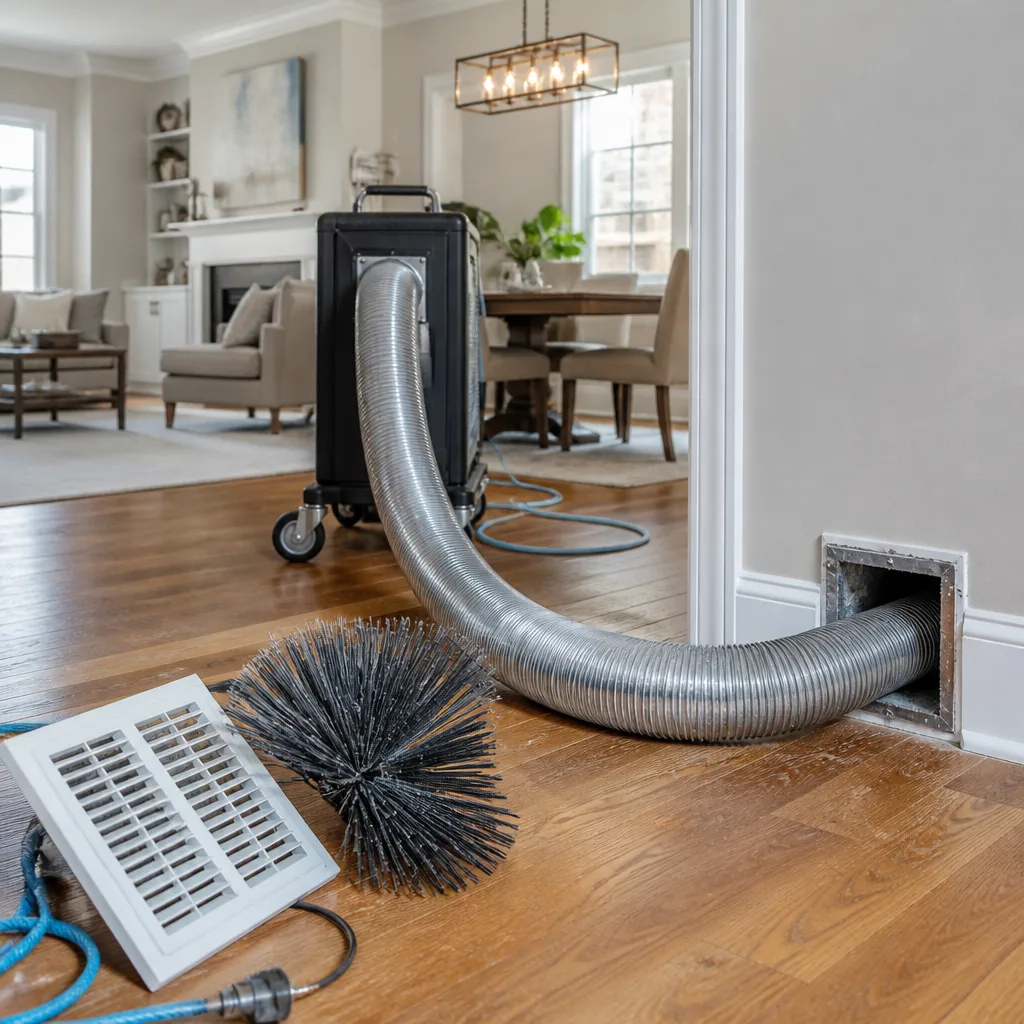 Whole-home duct cleaning
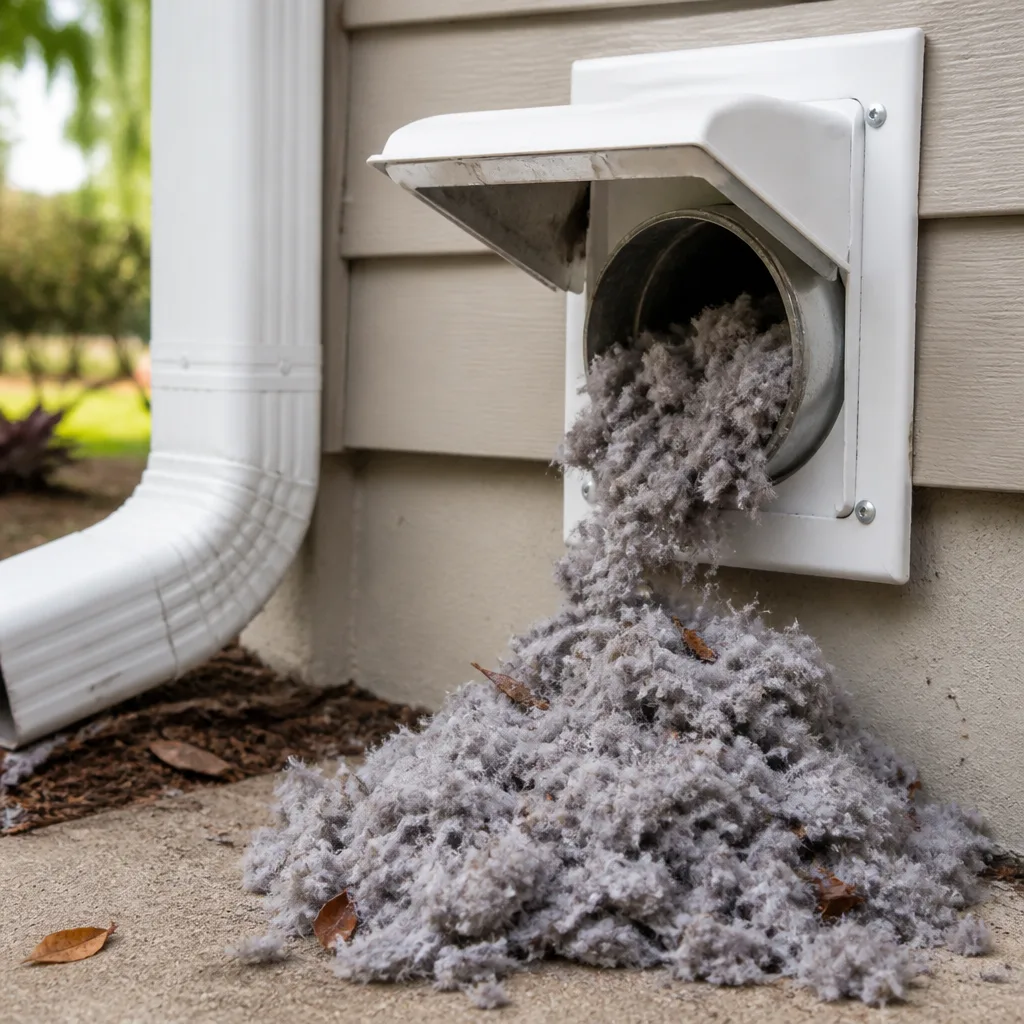 Dryer vent cleaning
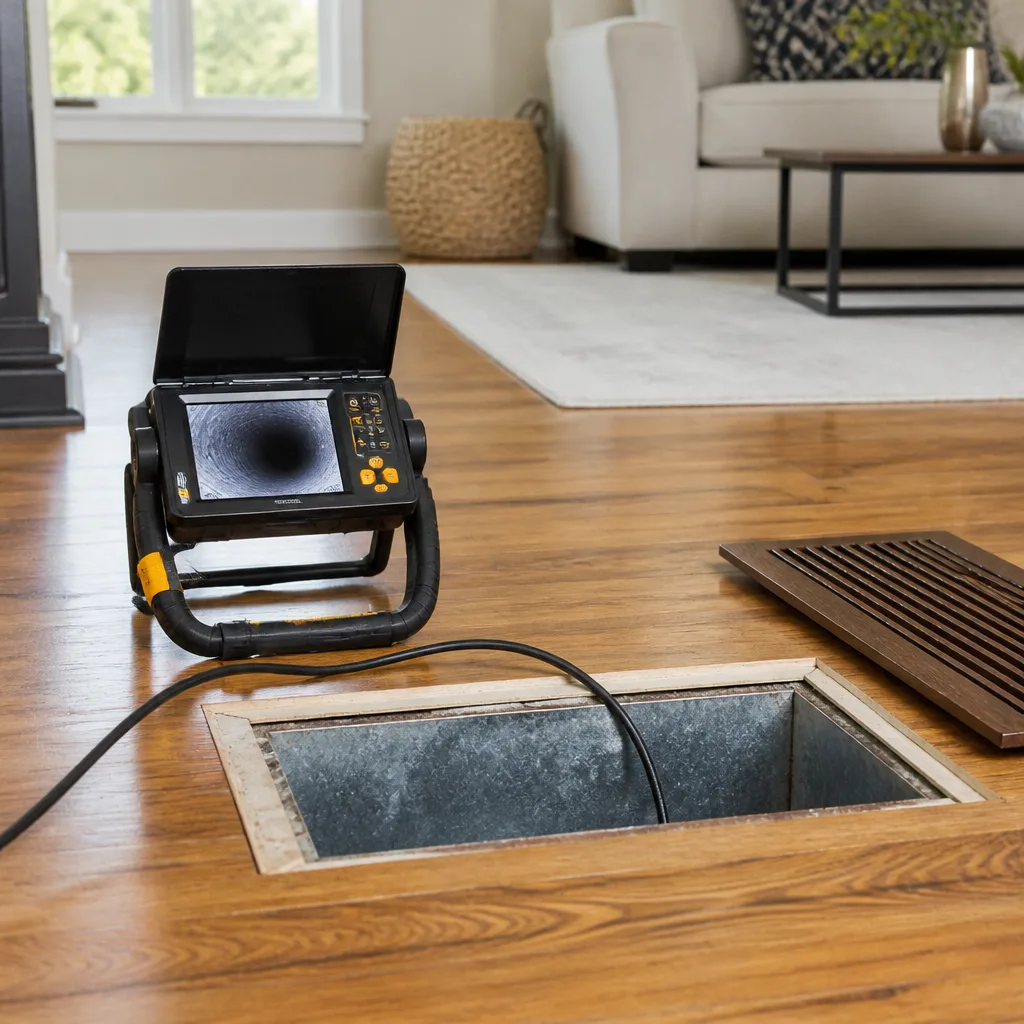 Camera inspection
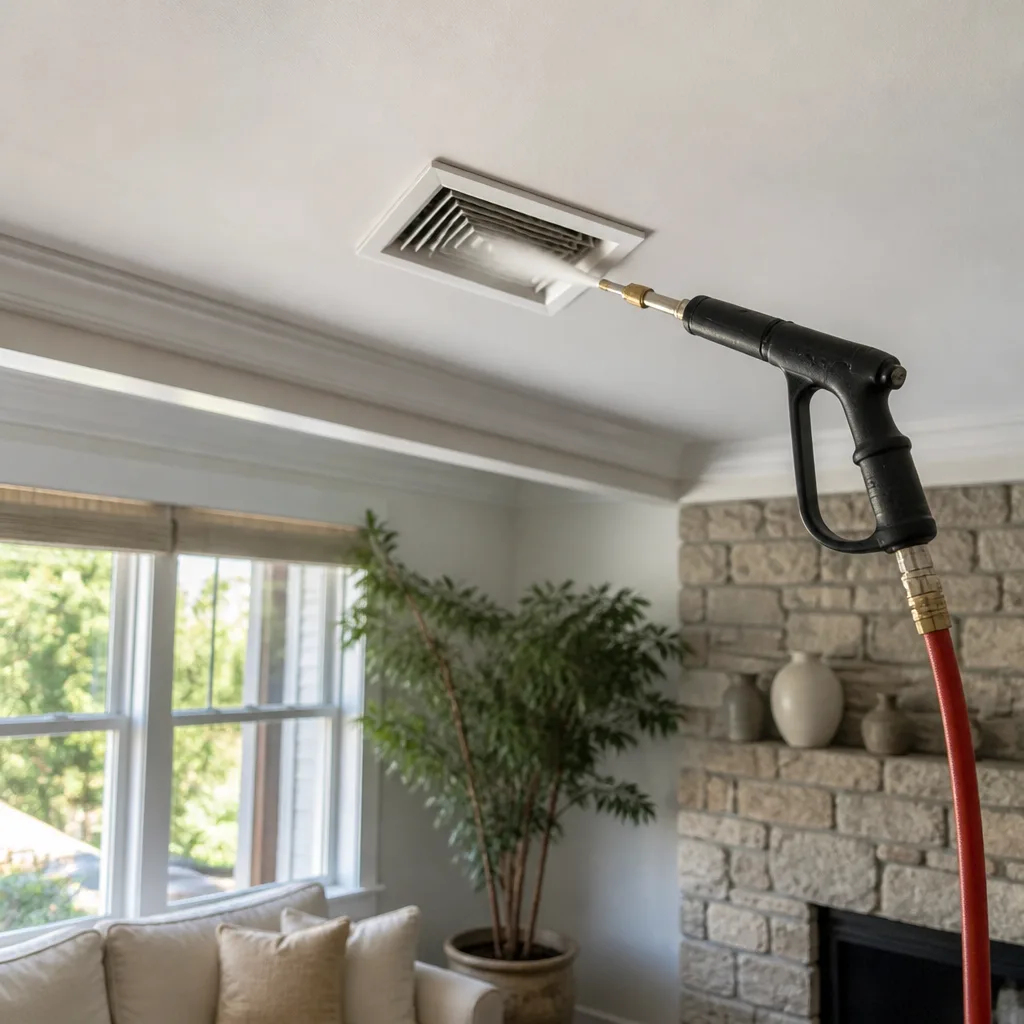 Sanitizing & deodorizing
Whole-system duct and dryer vent check with before-and-after photos - you see exactly what came out of your vents
That "$99 whole-house special" is a bait ad - the real number appears once they are in your hallway, or the "clean" is a shop-vac at the register. We photograph the inside of your ducts before and after instead.
The Complete Guide to Air Duct Cleaning in Provo
Most people assume duct cleaning means a technician runs a vacuum over the registers and calls it done. That assumption is the reason so many Provo homeowners pay for a service and see no change in their dust levels or allergy symptoms. In our experience, the registers are the least important part of the job. The contamination that actually reaches your lungs lives in the return plenum, on the blower wheel, and across the evaporator coil, places a surface vacuum never touches. This guide explains what a real full-system clean involves, why Provo’s high-altitude dry air and inversion-season particulate load make duct hygiene different here, and how to tell a complete job from a cosmetic one.
Quick Answer
Air duct cleaning in Provo is a full air-pathway service that cleans, repairs, seals, and sanitizes the entire system, not just the supply and return grilles. A proper job uses professional-grade negative-pressure equipment with rotary agitation, includes the blower wheel and evaporator coil, and finishes with before-and-after photos and a static-pressure reading. If a quote covers only the visible vents, it isn’t a complete clean.
Styles & brands we work with
- Whole-home duct cleaning
- Dryer vent cleaning
- Camera inspection
- Sanitizing & deodorizing
Table of Contents
- What Air Duct Cleaning Actually Involves
- The Anatomy of a Provo Home’s Air Pathway
- How Provo’s Climate Affects Duct Contamination
- What NADCA Standards Require vs. What Budget Operators Deliver
- Step-by-Step: A Full-System Clean From Start to Finish
- Red Flags That a Job Was Incomplete
- How Much Air Duct Cleaning Costs in Provo
- How Often Ducts Really Need Cleaning
What Air Duct Cleaning Actually Involves
A complete duct cleaning is a diagnostic and mechanical process, not a vacuum pass. It starts with an inspection of the whole air pathway, then moves through mechanical agitation and containment-grade extraction, then finishes with verification. The goal is to remove accumulated dust, debris, and biological growth from every surface your conditioned air touches, and to confirm the system is moving air the way it should.
We think of it the way you’d think about mopping a floor. Mopping half the kitchen and leaving the rest dirty doesn’t make the room clean. Cleaning the supply trunks but leaving the return plenum, blower wheel, and coil untouched leaves the same contamination circulating on every HVAC cycle.
In Provo, where homes run heating and cooling across big seasonal swings, the blower and coil stay busy, which means any contamination on them gets distributed continuously. A full-service clean at Provo Air Duct Cleaning covers:
- Supply trunks and branch runs
- Return plenums and return drops
- The air handler unit (AHU) cabinet and blower wheel
- Evaporator coil surfaces
- Registers, grilles, and diffusers
- Duct joints, which are checked for leaks and sealed where needed
We also offer duct repair and sealing, dryer vent clearing, and sanitizing, so the entire air pathway can be handled as one scope instead of three separate contractors. That matters in Provo because a clean system with leaky joints re-contaminates fast, and sealing is what keeps the work from being undone.
Why the blower wheel and coil matter most
The blower wheel is the fan that moves air through the system. When dust builds up on the blades, it throws the wheel out of balance and reduces airflow, which pushes your HVAC to work harder. The evaporator coil is where condensation forms during cooling season, and a damp, dusty coil is where mold and biological growth get a foothold. Neither is reachable through a register.
The Anatomy of a Provo Home’s Air Pathway
Every zone in the air pathway needs a different cleaning method, and treating them all the same is where most cheap jobs fall apart. Here’s how the system breaks down in a typical Provo home and why the approach changes from one section to the next.
Supply trunks and branch runs
These are the ducts that carry conditioned air to your rooms. They’re usually rigid galvanized metal or flex duct and range from large trunks to small branches. Mechanical agitation with a rotary brush is what loosens caked dust from the walls, followed by negative-pressure extraction. Flex runs need gentler handling than rigid metal so the liner isn’t damaged.
Return plenums and return drops
The return side pulls air back to the AHU and typically carries more dust load than the supply side, because it’s drawing from every room. Return plenums are often the dirtiest accessible part of the system and are frequently skipped by budget operators who only think about the supply vents.
The AHU cabinet and blower wheel
The air handler cabinet houses the blower and coil. The cabinet interior, the blower wheel, and the coil surfaces need direct mechanical attention. This requires opening service panels, which is why the blower and coil are left untouched in the majority of residential duct jobs. In Provo, dry air means a lot of fine particulate stays airborne longer before settling, so it ends up coating these components.
Duct joints and connections
Joints are where leaks happen. A leaky joint pulls attic or crawlspace air into the system alongside your conditioned air. We check joints during a clean and seal where needed, because a system that leaks well never stays clean for long.
How Provo’s Climate Affects Duct Contamination
Provo sits in a high-altitude valley with dry air most of the year and a winter inversion season that traps particulate near the ground. That combination changes how ducts behave here compared to a humid or coastal climate. Dry air means less condensation inside the ducts day to day, but the fine dust that stays suspended longer settles into the system and onto the coil over time.
During inversion season, the particulate in the air increases noticeably. That load works its way into your home every time the system cycles, and it settles on the blower wheel and coil where it can’t be seen from a register. Homes near the base of the mountains or older neighborhoods with mature trees tend to see more organic debris pulled in through returns.
- Dry air and fine dust: particulate stays airborne longer and coats internal components rather than falling out quickly.
- Inversion season: higher outdoor particulate load means faster internal buildup during those weeks.
- Big seasonal swings: heating and cooling both run hard, giving contamination more cycles to circulate.
- Renovation dust: construction and remodeling push drywall dust and sawdust straight into the return side.
What this means practically is that Provo homes can re-contaminate faster than homes in milder, more humid climates, which is why verification at the end of a job matters. Sealing leaky joints and keeping the coil clean slows that re-contamination and holds the result longer.
What NADCA Standards Require vs. What Budget Operators Deliver
The NADCA ACR (Assessment, Cleaning, and Restoration) standard is the industry reference for how a duct system should be cleaned, and the equipment requirements are the biggest practical difference between a qualified operator and a budget one. The standard calls for source removal, not just stirring dust loose, and source removal only works with real containment and real negative pressure.
Here’s the difference in equipment terms. A truck-mounted or high-capacity HEPA vacuum with enough airflow creates sustained negative pressure throughout the system, so loosened debris is captured and pulled out rather than redistributed into the house. A portable shop-vac rig creates almost no meaningful negative pressure across a whole system. It can pick up debris at the wand tip, but it can’t hold the whole duct under vacuum while agitation tools are working.
Equipment benchmarks to ask about
- Negative-pressure vacuum: ask whether it’s high-capacity and HEPA-rated. We use Nikro HEPA-rated equipment for containment-grade removal.
- Rotary agitation: mechanical brushing loosens caked dust that wands can’t reach. We run the professional-grade Rotobrush rotary brush system.
- Air filtration and containment: remediation-grade tools keep particulate out of the living space. We use Abatement Technologies air filtration equipment for that.
- Coil and blower access: the job should include opening the AHU cabinet and inspecting the coil and blower, not skipping them.
Asking these four questions before booking tells you more about a company than any price quote. A qualified operator will answer them without hesitation and will show you what their equipment can do.
Step-by-Step: A Full-System Clean From Start to Finish
A proper full-system clean follows a defined sequence so nothing gets missed and loosened debris stays contained. Here’s how a quality job runs, typically with the blower and coil inspected first so cleaning can be planned around the actual condition of the system.
- Inspection and system assessment. We inspect the AHU, coil, blower, plenums, and accessible trunks, and take a baseline static-pressure reading before anything is touched.
- Access panel setup. Small access openings are cut where needed to reach branch runs and plenum connections. These are resealed at the end.
- Negative-pressure containment. The HEPA vacuum is connected and the system is put under sustained negative pressure so loosened debris is captured at the source.
- Mechanical agitation. A rotary brush runs through supply and return runs to break dust loose from the duct walls.
- Blower and coil cleaning. The blower wheel and evaporator coil are cleaned directly, since these are the components most jobs skip.
- Sanitizing where needed. If biological growth is present, the affected surfaces are sanitized after cleaning and drying.
- Duct sealing. Joints that leak are sealed so the finished system stays clean and doesn’t pull attic or crawlspace air.
- Verification and documentation. Before-and-after photos, a post-clean static-pressure reading, and a coil inspection summary are provided so you can see exactly what changed.
The verification step is what separates a professional job from a cosmetic one. Without a static-pressure reading and photos, you have no way of knowing the blower and coil were ever touched. It’s also the reason we can stand behind the work with one flat price per system, agreed before we start. You know the scope before anything is opened.
Red Flags That a Job Was Incomplete
If a crew finishes and you’re handed an invoice with no documentation, you have no evidence of what was actually cleaned. Here are the red flags worth watching for, whether you’ve already had a job done or you’re screening quotes before booking.
- No before-and-after photos. A professional job ends with photos of your own ducts showing what was removed. A company that can’t produce them probably didn’t open the system.
- No static-pressure reading. This single number tells you whether the system is moving air properly before and after. Skipping it means airflow was never measured.
- No coil inspection report. If the coil was never inspected or cleaned, the biggest source of biological growth was left behind.
- Turning your HVAC on during the job. A proper clean runs with the system off and under negative pressure. A crew that asks you to run the fan during the job is circulating dust, not removing it.
- Very short job time. A full-system clean with coil and blower work takes time. A visit that lasts minutes per register is a surface job.
- No access panel cutting. If nobody opened or resealed the system to reach branch runs and returns, the internal sections weren’t cleaned.
We solve the trust problem the same way for everyone: one flat price per system agreed before work starts, no per-vent pricing, and photos of your own ducts as proof. That’s what we mean by verifiable professional work rather than the cheapest bid.
How Much Air Duct Cleaning Costs in Provo
Air duct cleaning in Provo typically ranges from a few hundred dollars for a single-system home up to a larger figure for full-system work that includes coil and blower cleaning, sealing, and sanitizing. Because pricing is per job, the written estimate sets the final price. Here’s how the scope breaks down so you understand what you’re paying for.
| Service scope | Typical pricing |
|---|---|
| Standard whole-system duct cleaning (supply and return) | Entry-range range per job, by estimate |
| Add blower wheel and AHU cabinet cleaning | Included in full-system scope |
| Add evaporator coil cleaning | Included in full-system scope |
| Duct repair and sealing | Quoted per job after inspection |
| Sanitizing | Quoted per job |
| Dryer vent cleaning | Quoted per job |
One flat price per system, agreed before we start, is the number that matters. We don’t quote per-vent prices or teaser coupon figures, because those numbers almost always grow once the technician is inside your house. If you’ve seen a very low quote for “the whole house,” the scope is almost certainly supply-only with no coil work.
Why are some quotes so much cheaper?
Cheap quotes are cheap because they’re smaller jobs. They usually skip the AHU, blower, coil, and return plenum, use portable equipment instead of a high-capacity HEPA vacuum, and provide no photos or verification. You pay less and get less. The likely outcome is that you rebook the job sooner or book a second company to do what the first one skipped.
How do I know the work was actually done?
Ask for before-and-after photos of your own ducts, a static-pressure reading, and a coil inspection summary. A company that does full-system work will have all three ready. Call (855) 658-4391 for an exact quote, estimates are free. We answer 24/7. Fast dispatch from 7am to 7pm, Sunday through Friday.
How Often Ducts Really Need Cleaning
There’s no universal schedule. Ducts need cleaning when the system has accumulated contamination that’s affecting air quality or efficiency, not on a fixed calendar. For most Provo homes, the honest answer is to inspect and then decide, because some homes need it more often than others.
Scenarios that typically warrant cleaning:
- Visible dust or debris accumulating at registers shortly after cleaning
- Recent renovation, remodeling, or construction dust
- Persistent dust in the home despite regular housekeeping
- Allergy or asthma symptoms that worsen indoors
- Musty odor or visible growth on the coil
- Reduced airflow or a system that’s running harder than usual
- A home that’s been vacant or is newly purchased
In Provo, the inversion season and dry, dusty air can speed up re-contamination, and homes with leaky duct joints in older built-out neighborhoods often need attention sooner. That’s one reason we include duct sealing in the standard scope. A sealed system holds its clean condition longer, which is the practical outcome most homeowners actually want. For dryer vent service, which addresses a separate fire-safety concern, we treat dryer vent cleaning as a core service rather than an add-on because lint buildup inside the vent is a recognized fire risk.
Common Mistakes to Avoid
- Booking on price alone. A very low quote almost always means supply-only, register-level work. You pay for surface cleaning and get surface results.
- Assuming the coil gets cleaned automatically. Unless the scope says “coil and blower cleaning,” it usually doesn’t. Ask directly.
- Running the HVAC during the job. Keep the system off and let the crew maintain negative pressure. Turning on the fan during the clean recirculates dust.
- Ignoring duct leaks in older Provo homes. Leaky joints pull attic or crawlspace air into the system and undo the clean. Sealing is part of a complete job.
- Overlooking the dryer vent. Lint accumulation is a fire risk, not a comfort issue. Have it cleared alongside the duct work when it’s due.
- Accepting a job with no documentation. No photos, no static-pressure reading, no coil report means no proof. Insist on all three.
- Mistaking a musty smell for a filter problem. A musty odor usually traces back to the coil or damp areas in the AHU, not the filter. It needs direct inspection.
See the difference
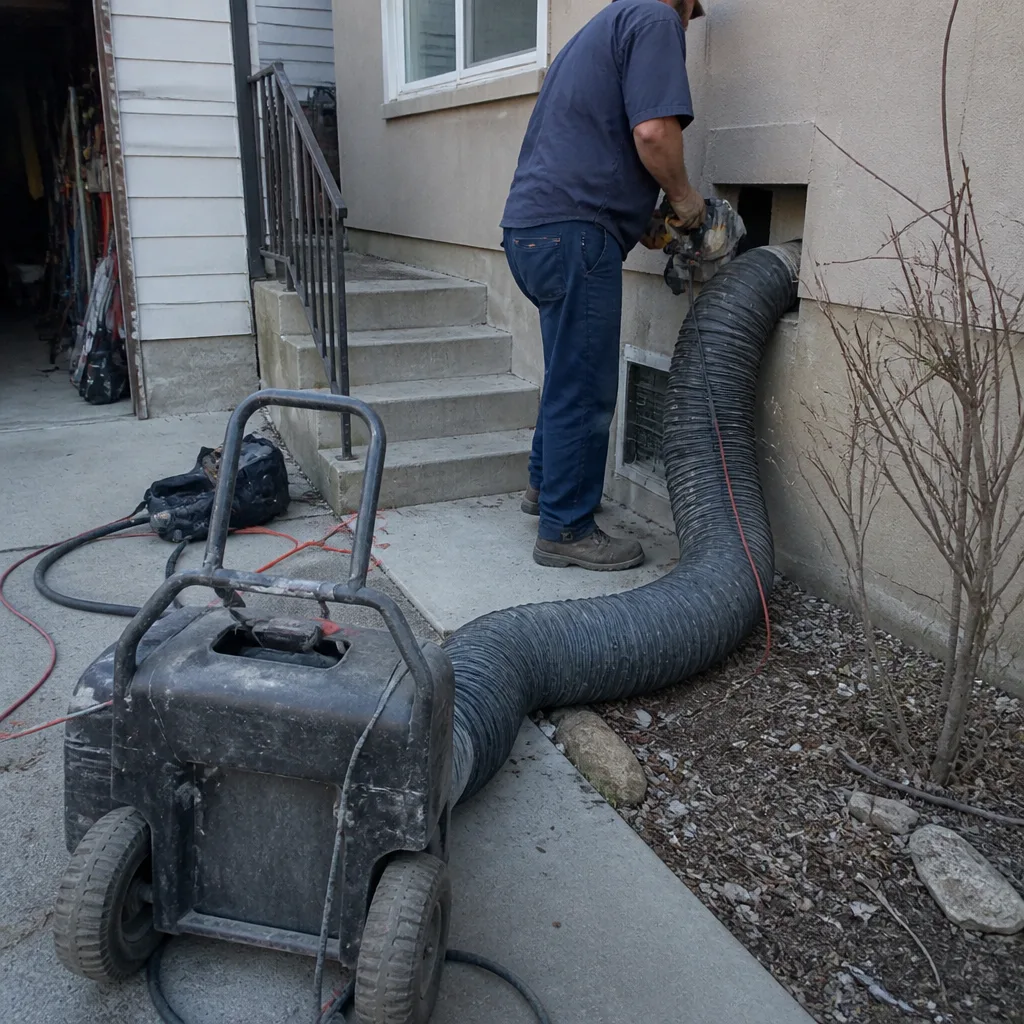 Before
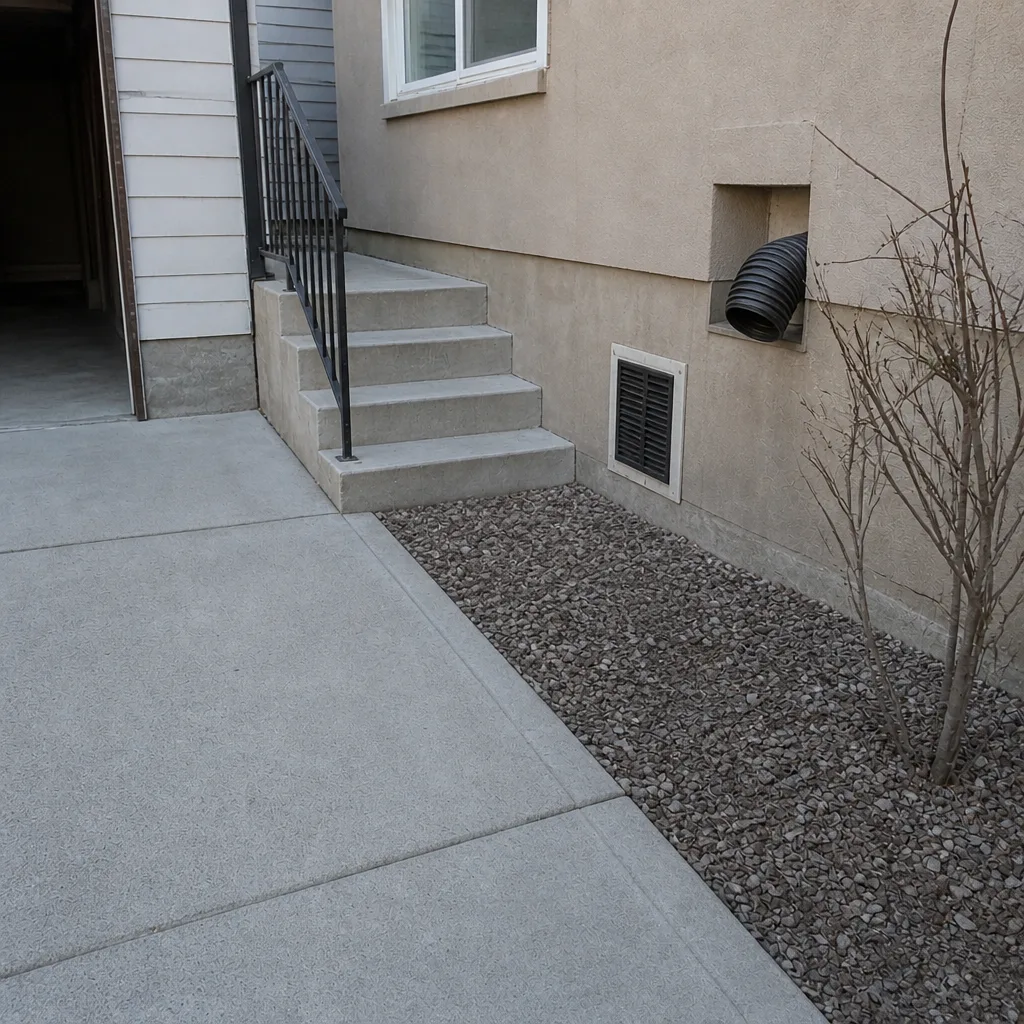 After
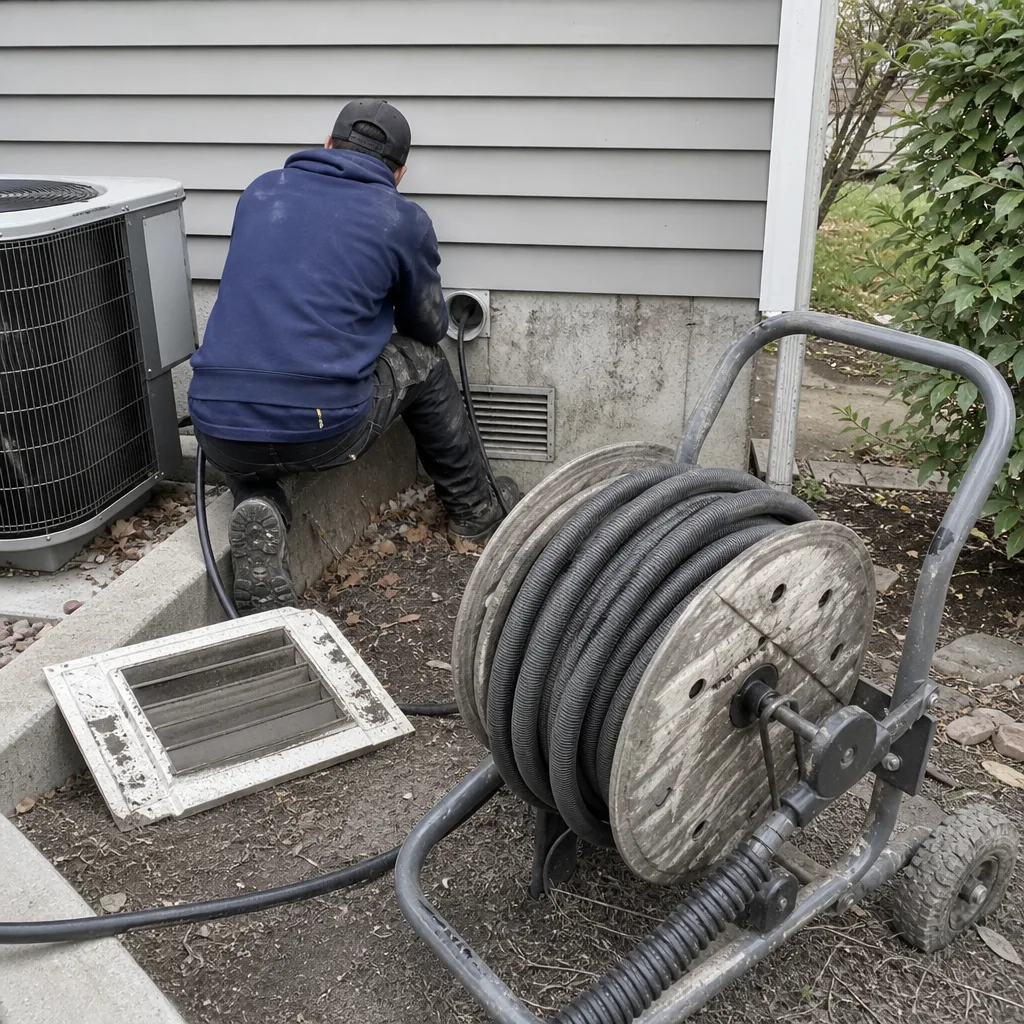 Before
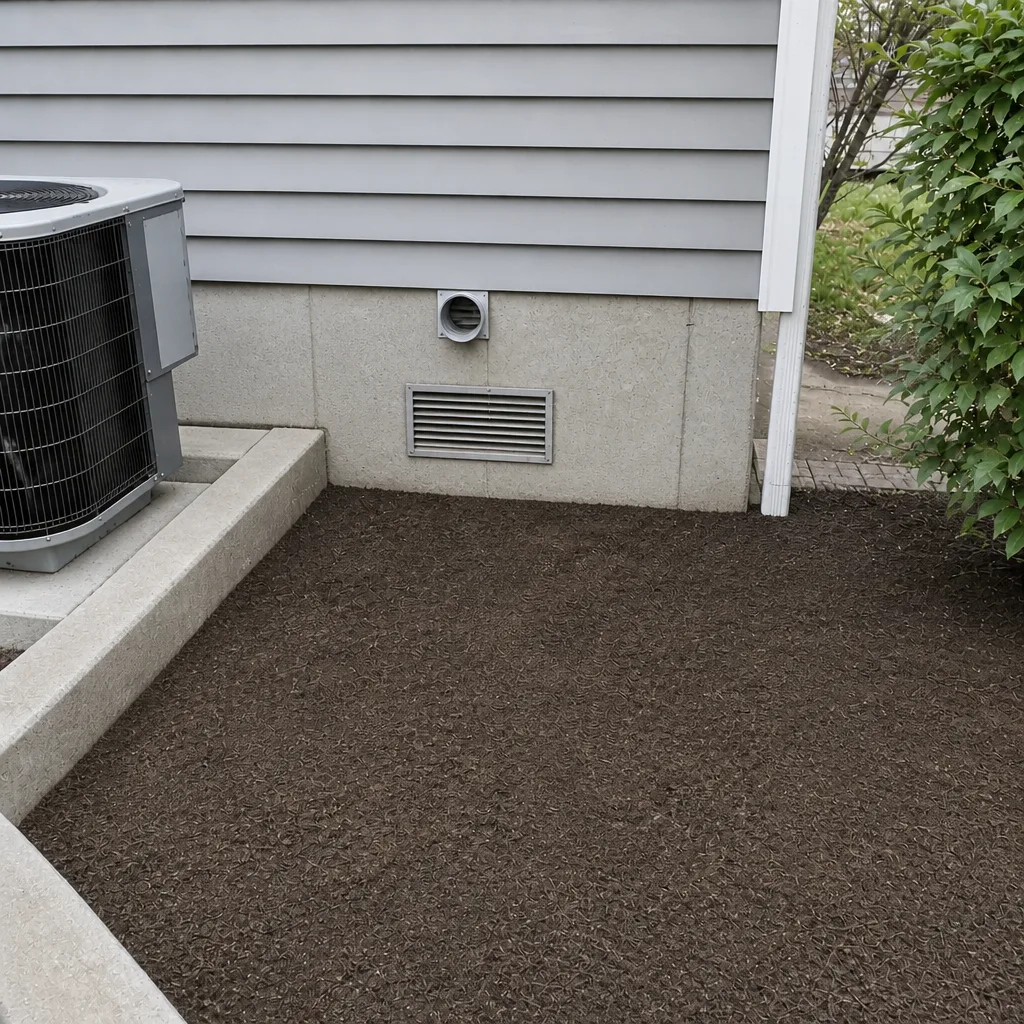 After
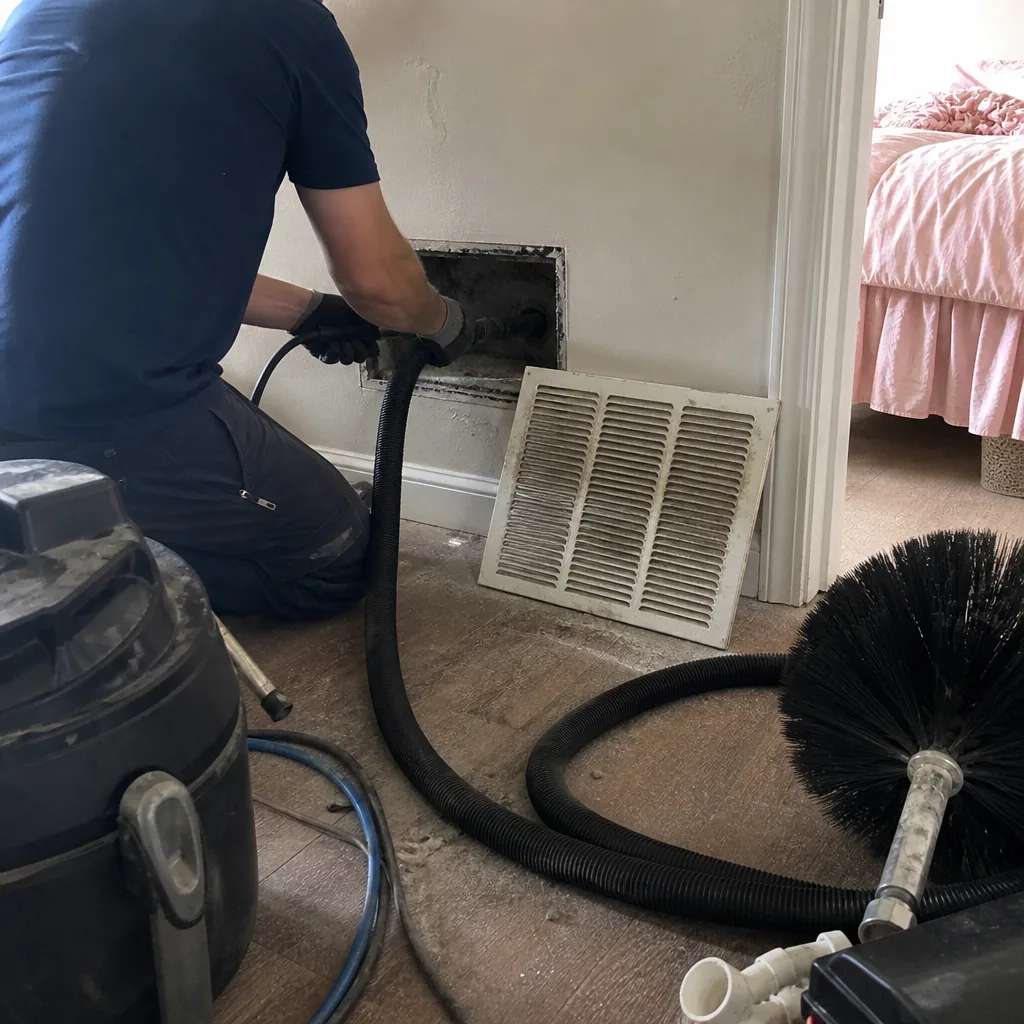 Before
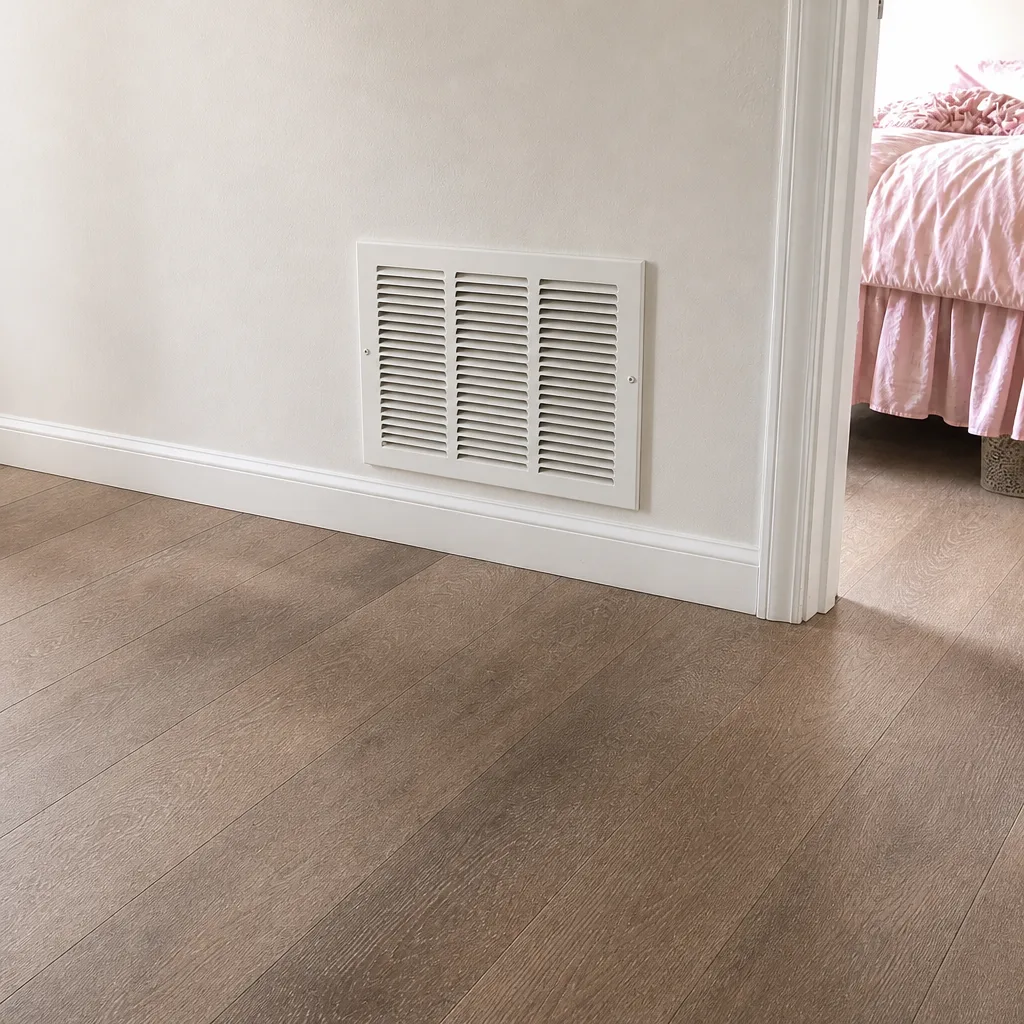 After
When to Call a Professional
Call a professional when the problem involves the equipment and components you can’t safely reach yourself: the blower wheel, the evaporator coil, and the interiors of plenums and trunks. Electrical panel work and gas lines are never a homeowner job, and the AHU cabinet carries energized components, which is one more reason to leave coil and blower access to trained technicians. If you’ve had a cheap job done and want to know what was missed, we’ll inspect and document the system. If you’re dealing with post-renovation dust, persistent allergies, reduced airflow, or a musty coil, a full-system cleaning is the right next step. We use professional-grade Rotobrush and Nikro equipment and work with brands that connect naturally to upgrades, including Honeywell and Aprilaire. If your home is ready for a full air-pathway audit, we offer free estimates in Provo. Call (855) 658-4391. We answer 24/7. Fast dispatch from 7am to 7pm, Sunday through Friday.
Frequently Asked Questions
Pricing is per system, not per vent, and the written estimate sets the final price. A full-system clean that includes the blower wheel, coil, and return plenum isn’t the same job as a register-only clean, so ask which scope a quote covers before comparing numbers. Call (855) 658-4391 for an exact quote, estimates are free.
It can, when the job removes the contamination that actually circulates: dust on the blower wheel, growth on the coil, and buildup in the return plenum. A register-only clean won’t change much because those components are left untouched. A full-system clean with coil and blower work is the version that makes a difference.
Low quotes are low because the scope is smaller. They typically skip the AHU, coil, blower, and return plenum, use portable equipment instead of a high-capacity HEPA vacuum, and provide no photos or verification. A full-system clean can’t be done for register-level pricing. Call (855) 658-4391 to talk through the scope you need.
A full-system clean of a typical home takes several hours because it includes access setup, negative pressure, agitation of supply and return runs, coil and blower cleaning, and final verification. A register-only job is much faster and much less thorough. The scope determines the time.
Yes. Renovation pushes drywall dust and sawdust into the return side, and that debris settles on the blower and coil where it can’t be seen. It’s one of the most common reasons Provo homeowners book a full-system clean. Call us for a documented inspection if you’re unsure whether the system needs it.
We price per system rather than per vent, and we quote the full air-pathway scope because partial cleaning is what leaves contamination circulating. If a component doesn’t need work after inspection, the estimate reflects that. For a clean you can verify, call (855) 658-4391, estimates are free.
The Bottom Line
Air duct cleaning in Provo is a full air-pathway service, and the difference between a complete job and a cosmetic one comes down to the components most operators skip: the blower wheel, the evaporator coil, the return plenum, and the duct joints. Provo’s high-altitude dry air and inversion-season particulate load mean ducts can re-contaminate faster here, so sealing and verification matter more, not less. Insist on one flat price per system, before-and-after photos, a static-pressure reading, and a coil inspection summary. For the rest of your system, HVAC cleaning rounds out the picture, and duct repair and sealing protects the work. Call (855) 658-4391 for a free estimate on your full-system clean.
Written by the team at Provo Air Duct Cleaning.