
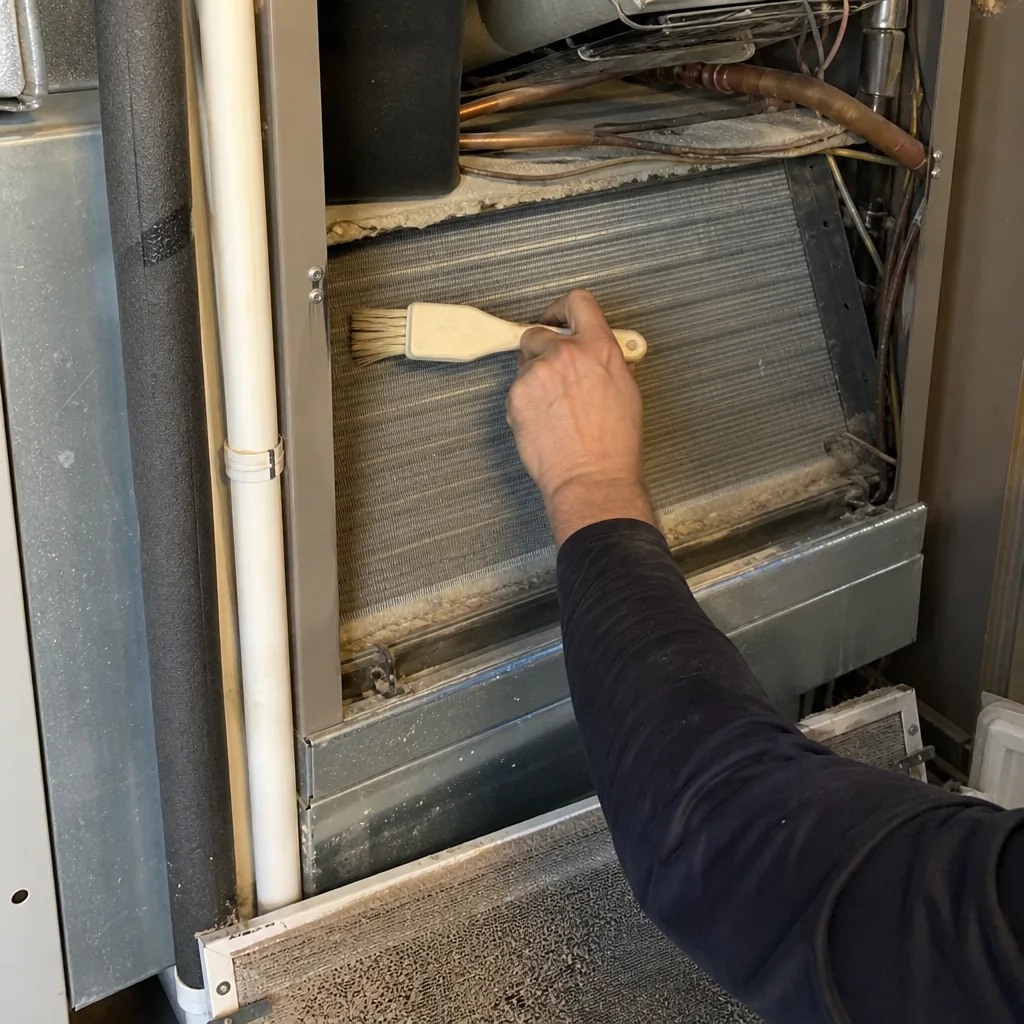
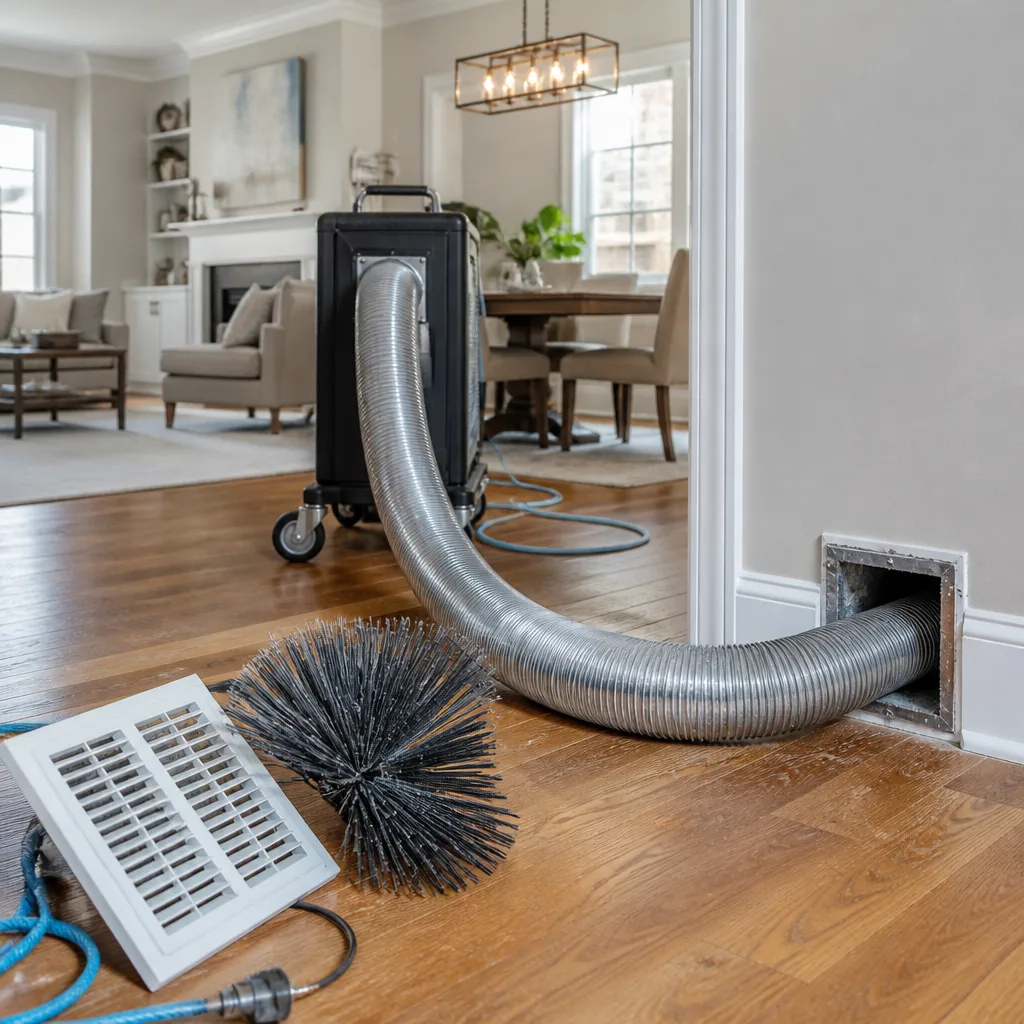
 Whole-home duct cleaning
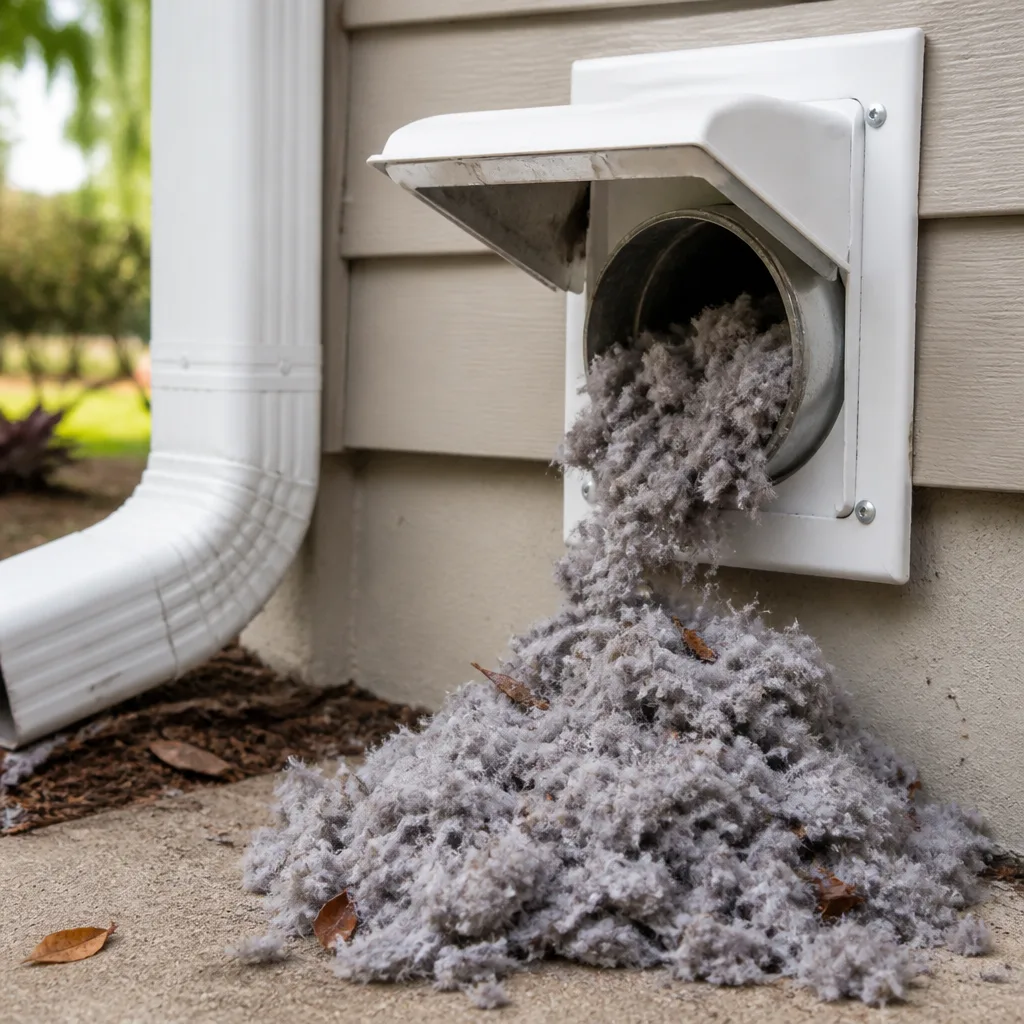 Dryer vent cleaning
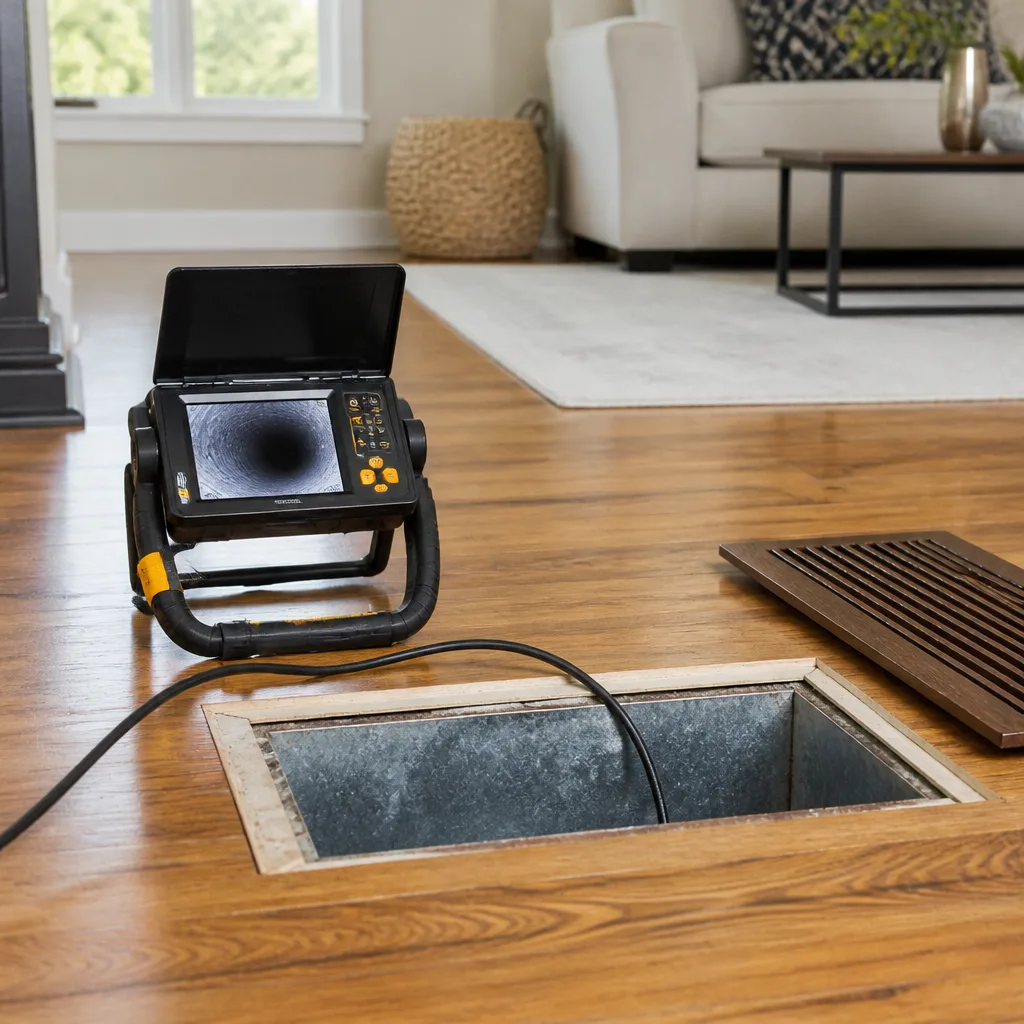 Camera inspection
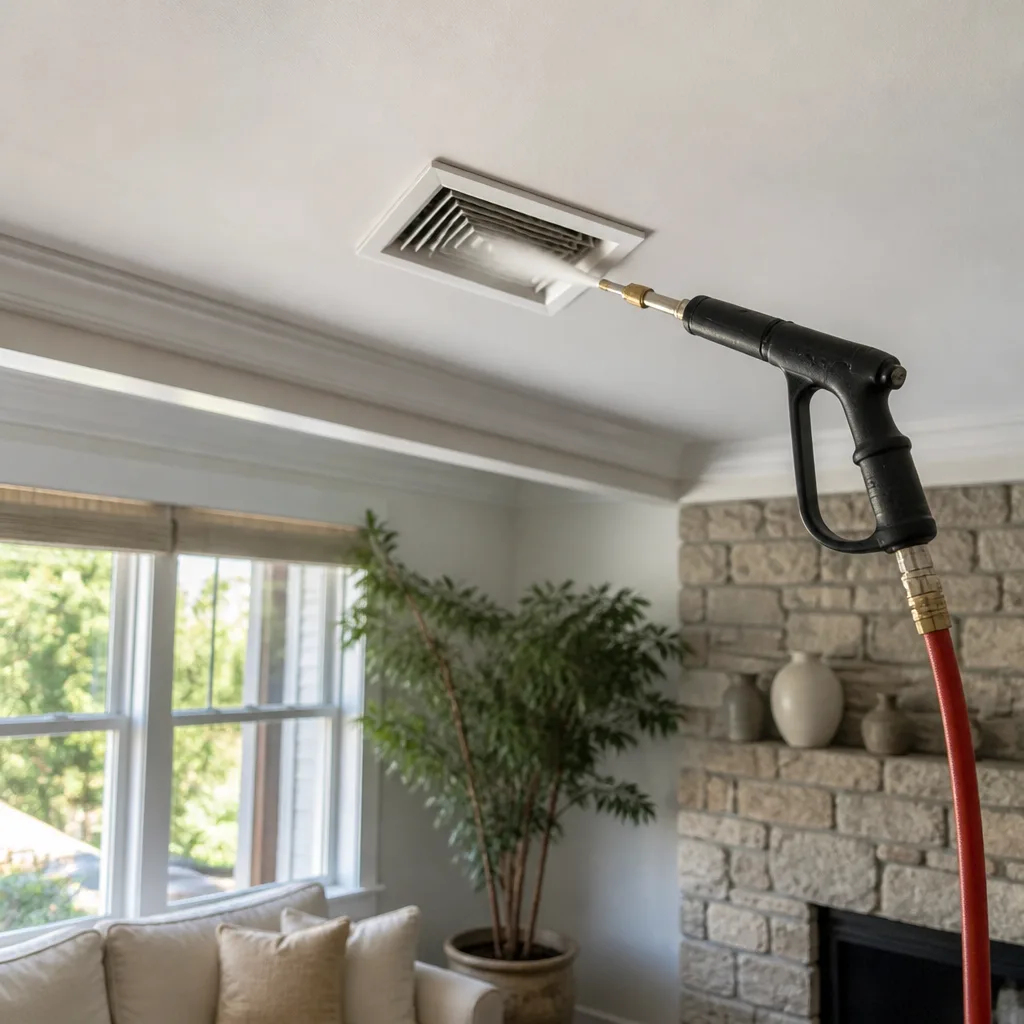 Sanitizing & deodorizing
Whole-system duct and dryer vent check with before-and-after photos - you see exactly what came out of your vents
That "$99 whole-house special" is a bait ad - the real number appears once they are in your hallway, or the "clean" is a shop-vac at the register. We photograph the inside of your ducts before and after instead.
Styles & brands we work with
- Whole-home duct cleaning
- Dryer vent cleaning
- Camera inspection
- Sanitizing & deodorizing
See the difference
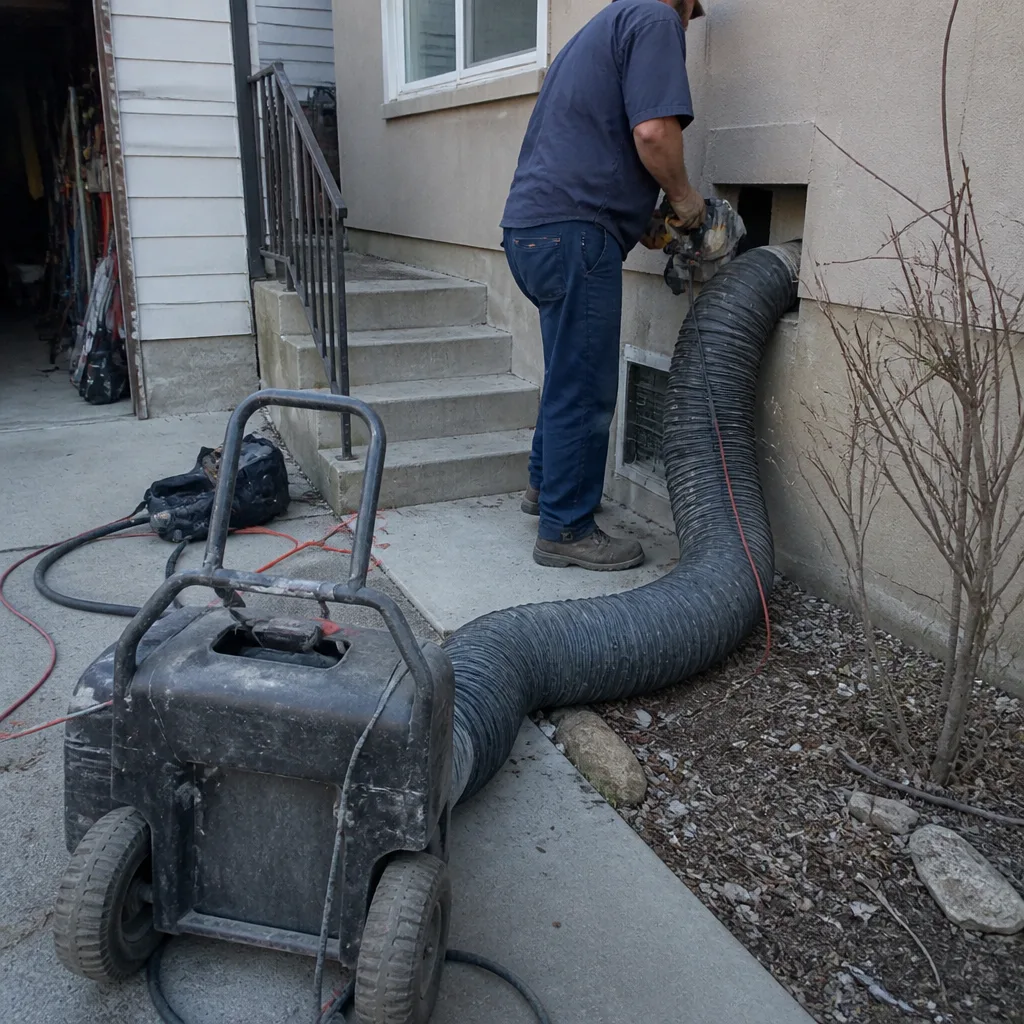 Before
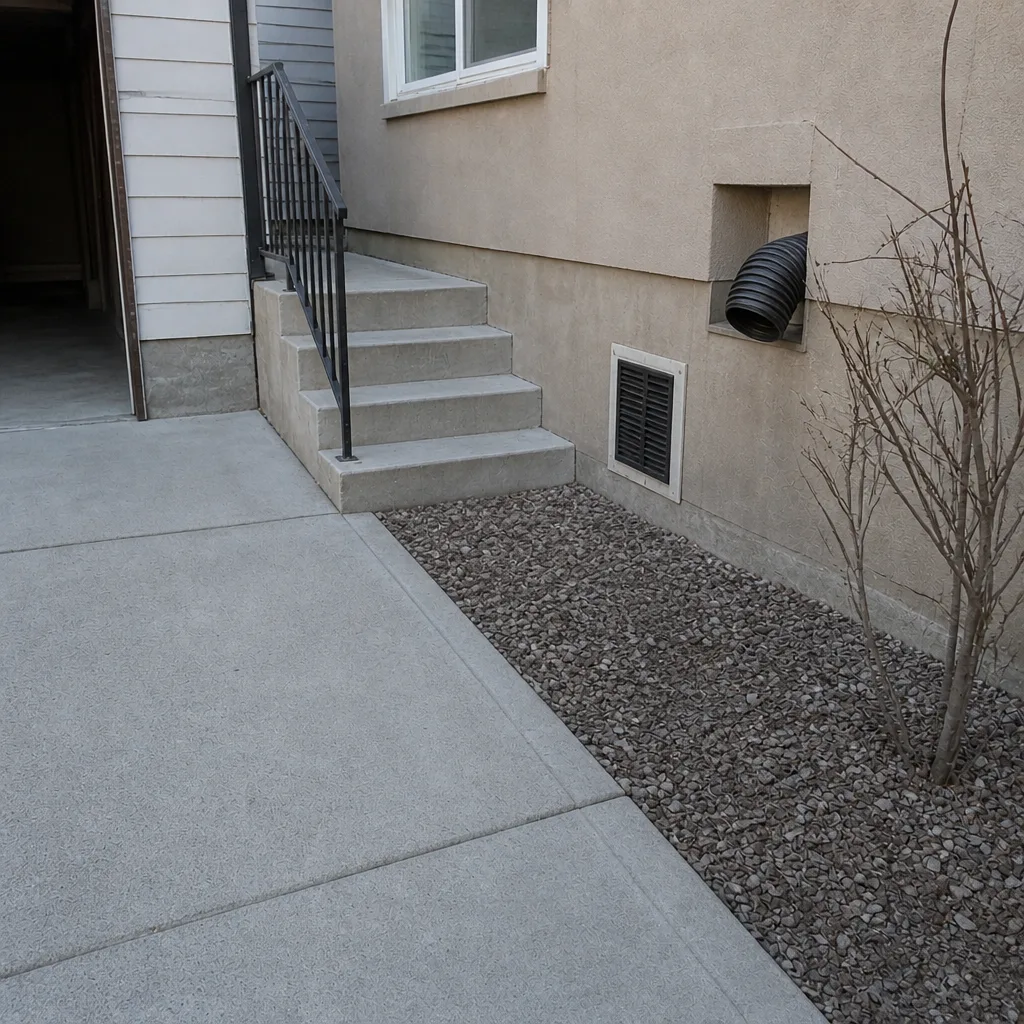 After
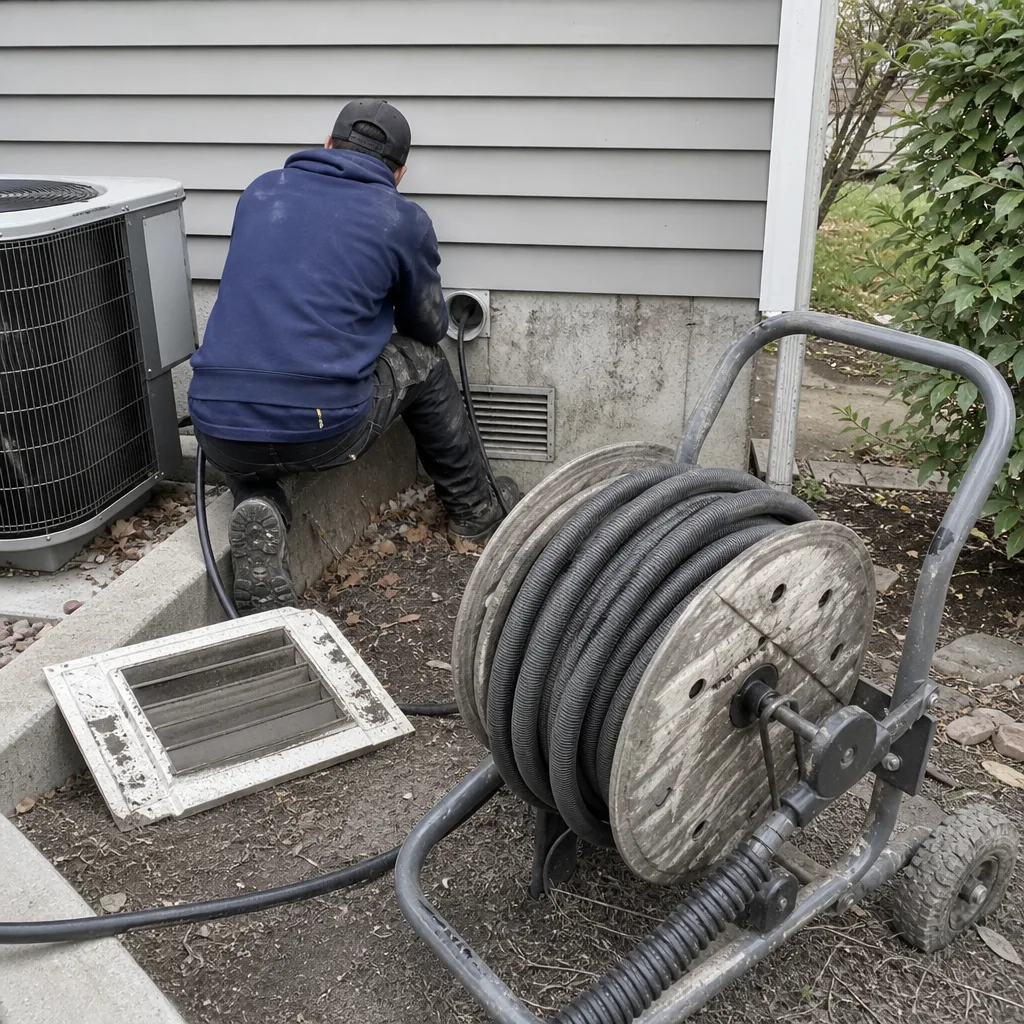 Before
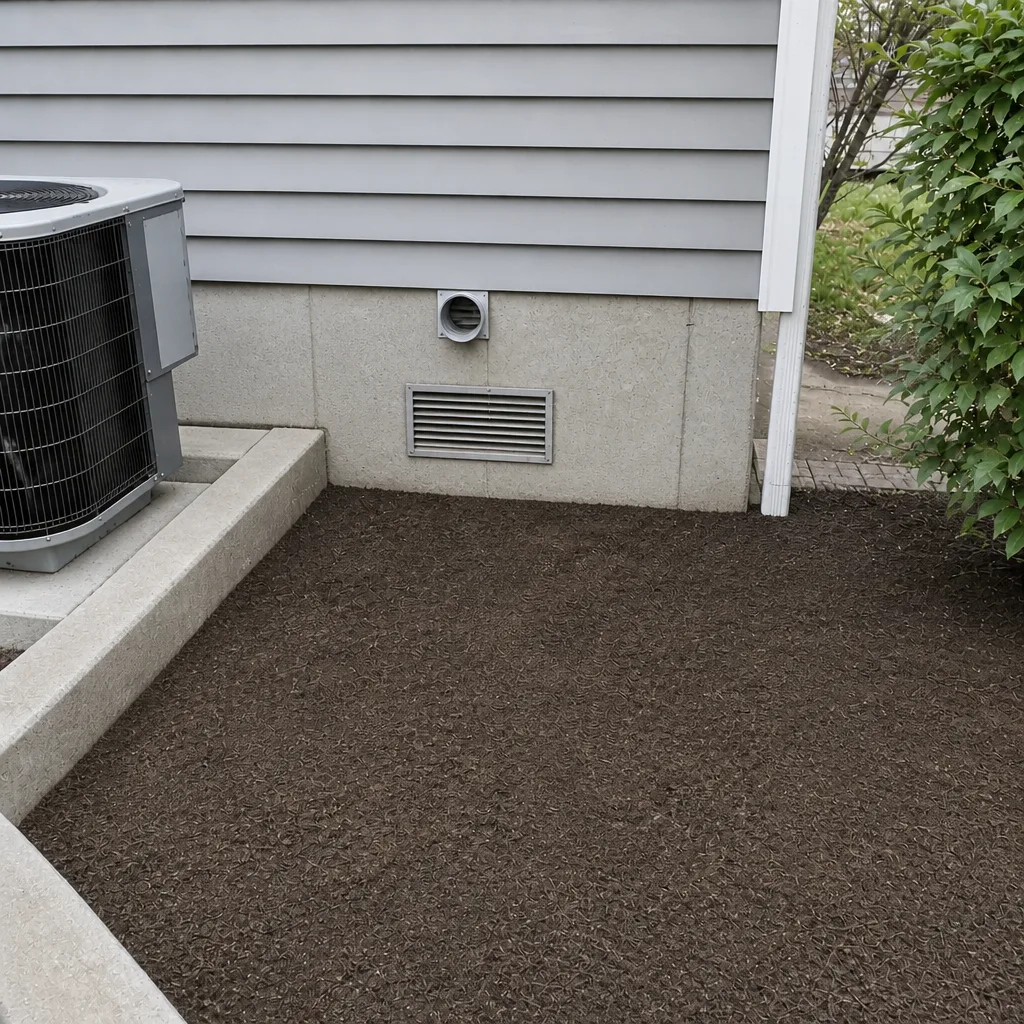 After
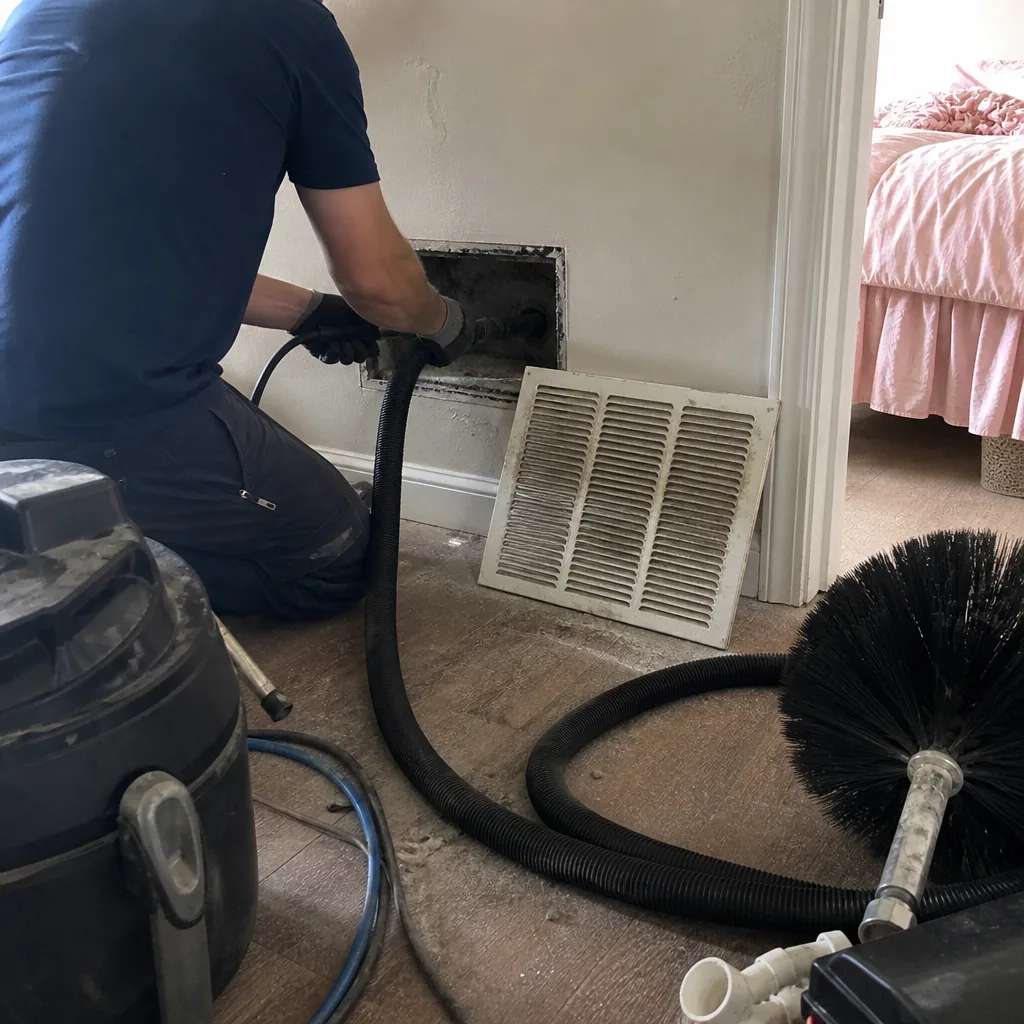 Before
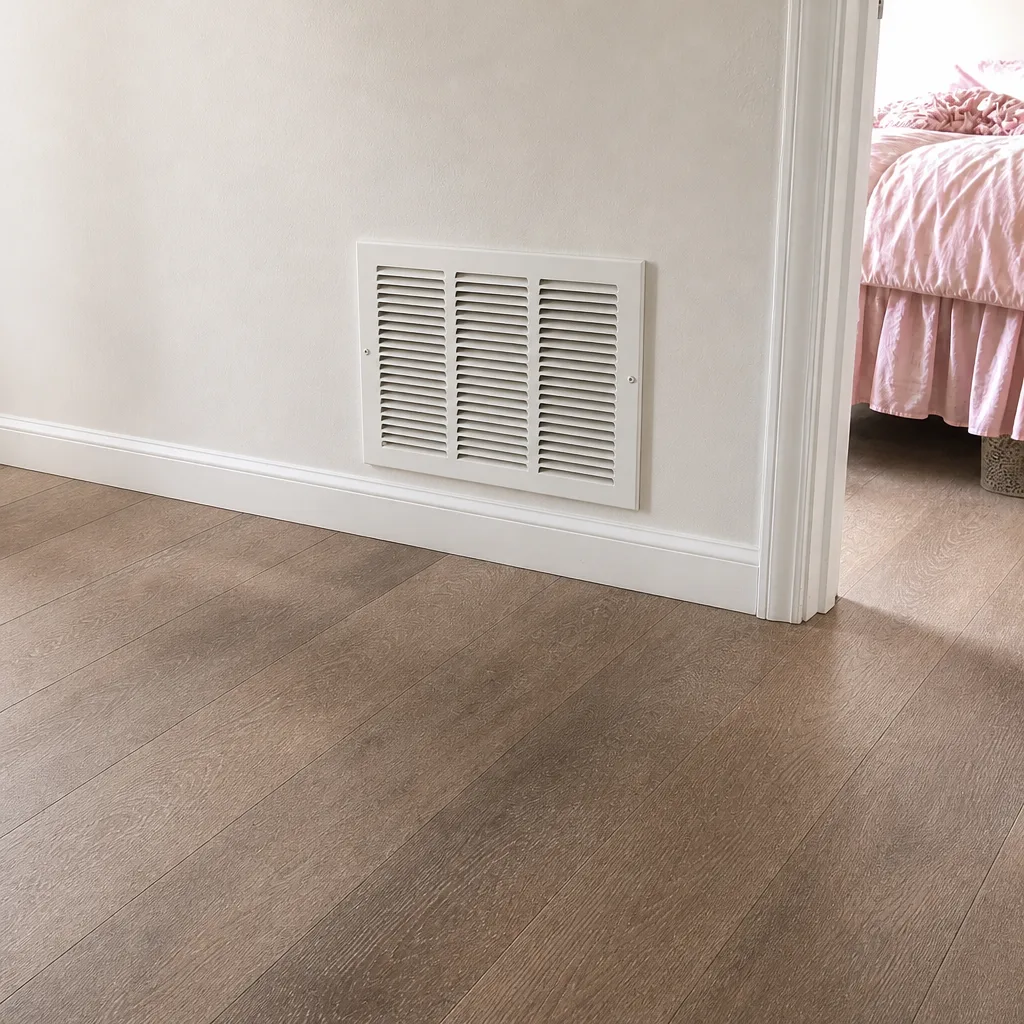 After
How Much Does HVAC Cleaning Cost in Provo?
HVAC cleaning in Provo typically costs $350 to $900 for a full residential system, with most single-family homes landing around $500. A single furnace or air handler cleaning runs $180 to $400, and adding sanitizing or dryer vent service pushes the total toward the top of the range. The written estimate sets the final price, and the estimate itself is free.
That range covers more than a pass with a shop vac. A complete job means cleaning the furnace, the evaporator coil, the blower, the return and supply trunks, the branch runs and the registers, then sealing what’s loose and sanitizing the parts that stay wet. We’ll get into exactly what moves the number up or down below, and where Provo homes tend to land.
If you want a straight answer for your house rather than a range, call (855) 658-4391. We answer 24/7. Fast dispatch from 7am to 7pm, Sunday through Friday.
Key Takeaways
- Typical full-system HVAC cleaning in Provo: $350 to $900, most homes around $500.
- Furnace or air handler only: $180 to $400. Coil cleaning alone: $150 to $350.
- Dryer vent cleaning as a standalone: $120 to $250.
- Duct sealing and sanitizing are the two add-ons that move the total most.
- Estimates are free and the price is set per job in writing before anything starts.
- Our technicians have up to 9 years of experience, and they work with Rotobrush and Nikro equipment rather than consumer vacuums.
HVAC Cleaning Cost Breakdown (2026)
Every system is different, but this is how the line items usually shake out for Provo homes. Think of each row as a component you may or may not need, not a package you’re forced to buy.
| Service | Typical 2026 Range | What It Covers |
|---|---|---|
| Furnace / air handler cleaning | $180 – $400 | Cabinet interior, blower wheel, heat exchanger surfaces, filter housing |
| Evaporator coil cleaning | $150 – $350 | Coil face and fins, drain pan, condensate line check |
| Supply and return duct cleaning | $250 – $650 | Trunks, branch runs, boots, and all registers and grilles |
| Full-system HVAC cleaning (combined) | $350 – $900 | Furnace, coil, blower, full ductwork, and registers as one job |
| Duct sanitizing | $100 – $300 | Fogging the cleaned air pathway; often paired with a full clean |
| Duct sealing (accessible joints) | $150 – $500 | Sealing gaps at joints, boots, and plenum connections |
| Dryer vent cleaning | $120 – $250 | Full vent run, lint trap housing, exterior termination check |
| Post-renovation duct cleaning | $400 – $950 | Heavier debris load, drywall dust, construction particulate |
Why the spread? Three things drive it. First, how much ductwork you actually have: a small ranch with six registers and a two-story with fourteen are different jobs. Second, how much is in there. A system that’s never been cleaned and one that’s had regular filter changes are not the same amount of work. Third, how accessible the runs are. Flex duct that snakes through a tight attic takes longer to clean than straight runs with open access, and labor is most of the price on any duct job.
Post-renovation cleaning sits higher for a reason. Drywall dust is fine, abrasive, and it settles everywhere in the air pathway. It also clogs filters fast, and if it gets pulled through the blower it can shorten the life of the motor. If you’ve just finished a basement or kitchen remodel, that’s the job where skipping a real clean costs you later.
What Affects HVAC Cleaning Pricing in Provo
Provo has some specific conditions that show up on estimates again and again. Here’s what actually moves the number.
- System size and register count. A 1,200-square-foot house near BYU campus with eight registers will come in well under a 3,000-square-foot home in the foothills with a zoned system and two air handlers. Register count and trunk length are the two numbers we care most about, and they’re why phone quotes stay ranges until someone sees the system.
- Utah Valley dust and spring pollen. Provo sits in a valley where spring runoff wind and nearby construction keep fine dust in the air, and cottonwood and grass pollen season is real. Systems here pull in particulate year-round, which means filters load faster and ductwork accumulates more than in a wetter climate. A home that’s gone several years without a clean usually needs more time, not more equipment.
- Dry air and static. Provo’s low winter humidity means more static cling on duct surfaces, so fine dust sticks instead of settling out. That’s a big part of why a system that looks clean at the registers can still have a loaded trunk line behind the drywall.
- Older housing stock and duct type. Plenty of Provo homes have original sheet metal trunks with flex branch runs added later. Mixed duct types mean more transitions to inspect and seal, and loose joints are where conditioned air escapes before it reaches a room.
- Access. An attic or crawlspace with a clear path and a solid deck costs less to work in than a tight space where equipment has to be handed in piece by piece. Provo’s older neighborhoods often have tighter attic access than newer builds on the east bench.
- What else you add. Sanitizing, sealing, and dryer vent cleaning are the three add-ons that show up most. Each is priced on its own and only included if you approve it.
When we look at a system, we’re checking the whole air pathway, not just the registers. That means the return side, the plenum, the coil, and the blower, because that’s where the dust that ends up in your living room actually starts. For a closer look at what a full clean involves, see our page on HVAC cleaning.
Repair, Seal, or Replace: What the Money Buys You
Cleaning is the service most people call for, but it’s not always the whole answer. If a duct run has separated at a joint, cleaning it and leaving it will just refill it with attic air. That’s why we quote duct repair and sealing as part of the same visit when the inspection turns something up. A sealed system holds pressure, and a system that holds pressure moves air to the rooms it’s supposed to.
The same logic applies to filtration. Many Provo homes still run a basic 1-inch filter in a slot designed for it, and upgrading to a thicker media cabinet from a brand like Honeywell or Aprilaire is a separate project, but it changes how often the ductwork loads up in the first place. We work with the brands already in your home, so if you have a Honeywell or Aprilaire setup, we know what we’re looking at.
Dryer vents deserve their own line here. A clogged dryer vent isn’t a comfort issue, it’s a fire risk, and it’s one of the most common causes of residential dryer fires. Lint builds up along the full run, not just at the trap, and the exterior termination is where blockages hide. If your dryer takes two cycles to dry a load, the vent is the first thing to check. We treat dryer vent cleaning as a core service, not an upsell.
How to Save on HVAC Cleaning
You can’t make a full-system clean cheap without cutting corners, but you can avoid paying for work you don’t need. A few practical moves:
- Change filters on schedule, not when you remember. In Provo’s dusty spring and dry winter, a 1-inch filter can load up faster than the box says. A clean filter means less debris reaches the blower and coil, which means less labor on the next cleaning.
- Bundle the dryer vent into the same visit. If we’re already set up for ductwork, adding the dryer vent run costs less than a separate trip. It’s also the single most safety-relevant item on the list.
- Clean before you renovate if you can, after if you can’t. Sealing off returns during a remodel and cleaning afterward protects the blower. Skipping it and letting drywall dust cycle through the system is the expensive path.
- Fix leaks at the same time. Sealing accessible joints while the system is open costs less than coming back later, and it’s the fix that keeps cleaning from being a recurring expense.
- Ask what’s actually dirty. If your coil and blower are clean and only the branch runs are loaded, you don’t need the full package. A written estimate should itemize what’s being done and why.
Estimates are free, so there’s no cost to finding out where your system actually stands. Call (855) 658-4391 and we’ll set up a time. We answer 24/7. Fast dispatch from 7am to 7pm, Sunday through Friday.
Why Professional Equipment Changes the Price (and the Result)
A cheaper bid usually means cheaper equipment. Consumer vacuums and shop-vac setups pull surface dust but can’t agitate what’s bonded to duct walls, and they don’t contain fine particulate the way a HEPA-rated system does. When we clean, we’re using a Rotobrush rotary brush system to mechanically agitate and extract debris from the duct walls, paired with Nikro HEPA-rated vacuum equipment to contain it. For heavier contaminant loads, we bring in Abatement Technologies air filtration equipment, the same category used in remediation and restoration work.
That equipment is why a professional clean is priced where it is. It’s also why the job doesn’t need to be repeated every year for most homes. A properly cleaned, sealed, and filtered system holds its condition far longer than a surface pass.
If you’re comparing bids and one is dramatically lower, ask what equipment is being used and whether the blower and coil are included. That question separates the real quotes from the ones that only cover registers and call it a full clean.
Call for a Free Estimate
If you’re in Provo and your system hasn’t been cleaned in a while, or you’ve just finished a remodel and want the dust out of the air pathway, we’ll come look at it and give you a written estimate with the price itemized. No pressure to add anything you don’t need. Call (855) 658-4391 for a free estimate. We answer 24/7. Fast dispatch from 7am to 7pm, Sunday through Friday.
FAQs – HVAC Cleaning Cost
How much does HVAC cleaning cost in Provo?
$350 to $900 for a full residential system, with most single-family homes around $500. Furnace or air handler cleaning alone runs $180 to $400, and full ductwork cleaning runs $250 to $650. Call (855) 658-4391 for an exact quote for your system; estimates are free.
Can you clean my HVAC system the same day?
Often, yes. We dispatch Sunday through Friday, 7am to 7pm, and same-day service is available when the schedule allows. Call (855) 658-4391 early in the day for the best chance at a same-day slot. We answer 24/7.
Is it cheaper to repair my ducts or replace them?
Repair and sealing is almost always the cheaper path when the ductwork itself is sound. Sealing accessible joints typically runs $150 to $500, while replacing duct runs is a much larger project. We’ll tell you honestly which one your system needs after we’ve seen it.
How much does dryer vent cleaning cost in Provo?
$120 to $250 as a standalone service, less when bundled with HVAC duct cleaning on the same visit. It’s a fire-safety service, so it’s worth doing even if your ducts are clean. Call (855) 658-4391 to add it to an estimate.
What’s included in a full HVAC cleaning?
A full clean covers the furnace or air handler, the evaporator coil, the blower, the return and supply trunks, the branch runs, and every register and grille. Sanitizing, duct sealing, and dryer vent cleaning are quoted separately and only done if you approve. That’s why the full-system range starts at $350 rather than a single flat fee.
Pricing reflects the Provo market as of 2026. Provo Air Duct Cleaning offers free estimates – call (855) 658-4391.
Written by the team at Provo Air Duct Cleaning.
What Our Customers Say
"Quoted per system rather than the bait and switch per vent pricing everybody else in town uses. The number I was told on the phone was the number on the invoice."
- Tracy Doyle"Told me straight that our ducts were in decent shape and didn't need doing every year like the mailer companies claim."
- Gabriela Delgado"Fair price and thorough work. They ran about an hour and a half past the estimated finish time, so don't schedule anything tight after."
- Holly Ackerman