
Nikro Air Duct Cleaning in Provo: A Homeowner’s Guide
Most homeowners in Provo never ask what equipment the duct cleaner will use. They ask the price, then book whoever answers first, and the answer matters more than they think. A house with original metal trunk lines feeding flex branches needs controlled suction and the right agitation tool for each section, and a general-purpose shop vac can’t deliver either. This guide explains what a Nikro system actually is, what it does inside your ducts, and how to tell real equipment from a dressed-up vacuum.
If reading this makes you want a second opinion on a quote you’ve already got, call (855) 658-4391. We answer 24/7.
What is a Nikro air duct cleaning system, and why does the brand matter?
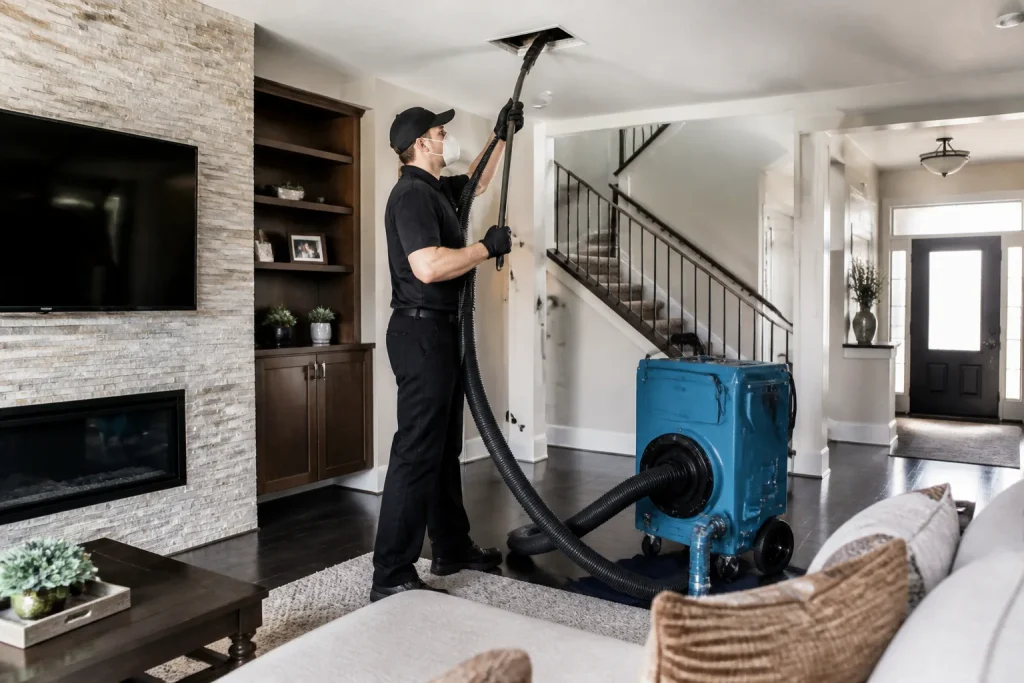
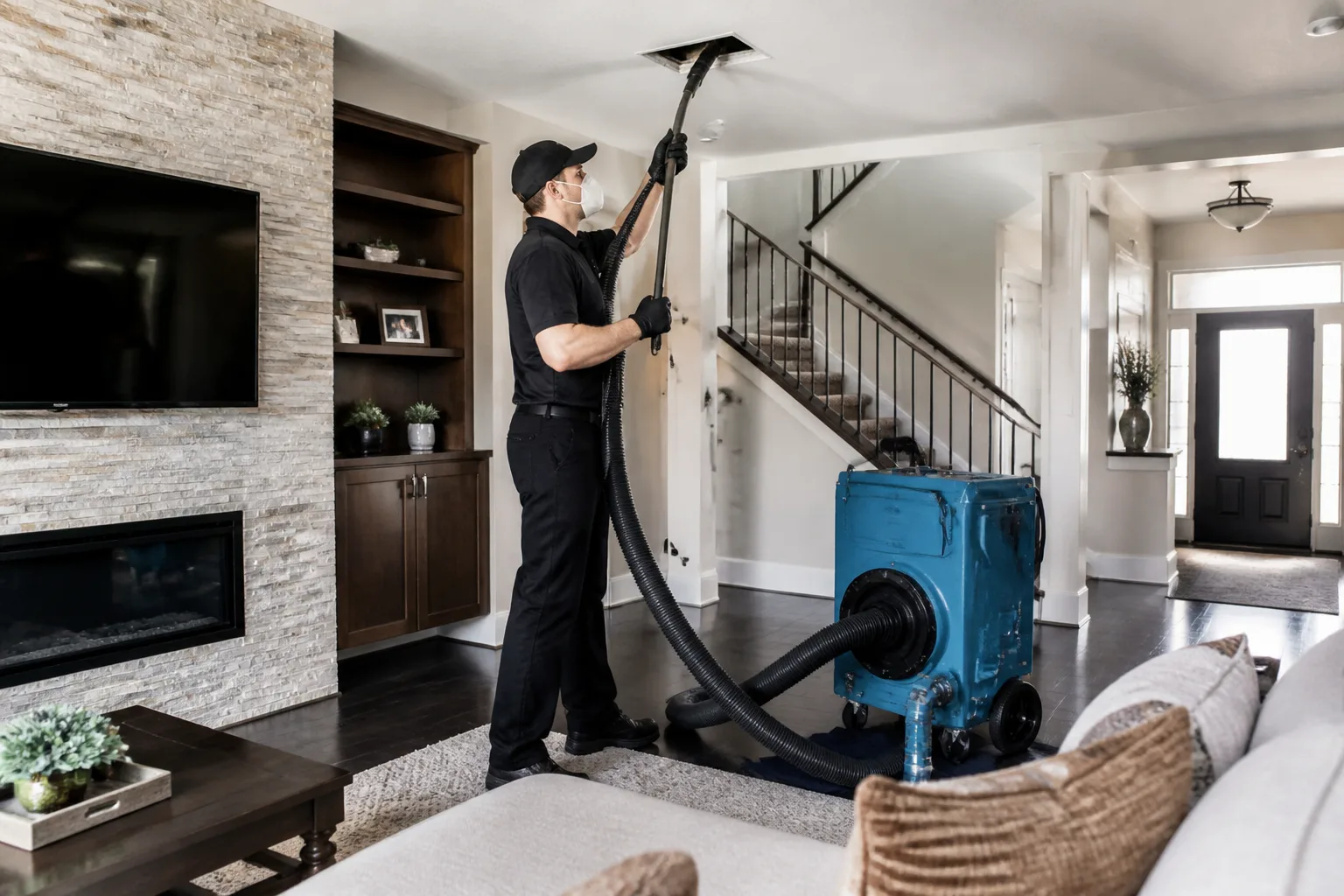
A Nikro system is a purpose-built negative-air duct cleaning machine. It’s a commercial canister unit with high airflow, multi-stage HEPA filtration, and sealed debris collection, and it’s the same category of equipment used in mold remediation and post-fire restoration work. The brand matters because most residential duct cleaning in Provo is done with portable units built to a consumer price point, and those machines collect surface dust while leaving heavier particulate in the system.
Here’s the plain-language version of the specs you’ll see on a Nikro unit:
- Airflow (CFM): This is how much air the machine pulls through the duct while it’s connected. Higher airflow keeps debris suspended all the way to the collection canister instead of letting it settle back down in a run the technician just cleaned. A weak unit loses suction as the hose lengthens; a commercial machine holds it.
- Filtration stages: A HEPA-rated final stage captures fine particulate at the machine rather than blowing it back into the room. That’s the difference between cleaning ducts and redistributing what was in them across your furniture.
- Sealed collection: Debris goes into a contained bag or drum. You shouldn’t see dust clouds, and you shouldn’t find a fine film on the coffee table afterward.
We run Nikro HEPA-rated vacuum equipment alongside a Rotobrush rotary brush system, and we pair both with Abatement Technologies air filtration tools when a job involves heavier contaminant loads. Our technicians have up to 9 years of experience with this class of equipment.
How does the agitation-and-capture method work inside a duct?
Cleaning a duct is two jobs happening at once: loosening what’s stuck to the walls, and capturing it before it goes anywhere else. Nikro equipment handles the capture side. The agitation side uses different tools depending on the duct, and the sequence is what separates a real cleaning from a quick pass.
- Establish negative pressure. The vacuum connects to the system first, so the whole duct run is under suction before anything gets disturbed. Skip this step and agitation just moves dust into the living space.
- Agitate the walls. Air whips use compressed air to flail against the duct interior, knocking loose the caked layer of dust that clings to metal. Skipper balls do similar work in larger round trunk lines, tumbling through the run as air pushes them along.
- Contact vacuum the reachable sections. Where a run is short enough to reach, the technician works a contact vacuum head along the interior by hand. It’s slower, and it’s the most thorough method for the sections it can reach.
- Repeat until the return air runs clear. The visual check is the duct interior at the register and at the plenum. A technician should be able to show you the difference.
This sequence is why we describe our work as cleaning your entire air pathway rather than just the vents. The registers are the last thing to get touched, not the whole job.
Why Nikro-class equipment suits Provo’s mix of old metal and newer flex duct
Provo’s housing stock is genuinely varied. Older homes around the downtown grid and the tree-lined blocks near BYU often have original galvanized metal trunk lines with smaller flex branches added during later remodels. Newer construction out toward the east bench is mostly flex duct throughout. Those two systems behave differently under suction, and a cleaner who runs one tool through both will damage one of them or miss it entirely.
Metal trunk lines are rigid and handle aggressive agitation well. They’re also where dust compacts hardest, because the seams and joints give it somewhere to catch. Skipper balls and air whips work these runs effectively.
Flex duct is a different animal. The interior is a plastic liner over a wire helix, and too much brush pressure can tear it or pull the liner loose. It needs lower-pressure agitation and steady, controlled suction so the liner doesn’t collapse against the vacuum. A Nikro machine’s adjustable airflow makes that possible; a fixed-suction shop vac doesn’t give the technician that control.
Condition matters as much as age. Metal duct in an older Provo home may have loose joints or small tears at the seams, and cleaning without addressing those just gives the dust a new path back into the living space. That’s why we treat duct repair and sealing as part of the same visit rather than a separate project.
When is a portable Nikro system a better choice than a truck-mounted unit?
Portable systems are the better choice whenever access is the constraint, and in Provo that comes up more than people expect. A truck-mounted unit needs the truck close to the house and a hose run that can reach the duct system without excessive length, which saps suction anyway. A portable Nikro unit comes inside and connects directly.
Specific situations where portable wins:
- Multi-story homes: A truck hose loses pressure over distance and elevation. A portable unit placed on the same floor as the duct run keeps full suction where the work is happening.
- Finished basements: If the mechanical room is behind finished walls with a narrow access path, dragging a long hose run through the house creates a mess and a trip hazard. A portable unit handles the space.
- Duct systems with multiple disconnected zones: Each zone gets its own connection. A portable unit moves to the next one; a truck hose can’t always follow.
- Homes with no practical driveway access to the mechanical side: Setbacks, fences, and steep lots all make truck access awkward. The equipment goes inside instead.
None of this makes truck-mounted units useless. It means the equipment should match the house. When you get a quote in Provo, it’s fair to ask which setup the company plans to use and why.
What should you see and hear during a Nikro cleaning job?
You don’t need to inspect the machine to know whether a job is being done right. A properly run cleaning has a recognizable sound and a visible paper trail, and a homeowner can verify both without climbing into the attic.
What you should hear: a steady, continuous suction hum from the machine and periodic bursts of compressed air as the technician works the whip through a run. What you shouldn’t hear is a machine cycling on and off, or long stretches of silence followed by a lot of banging.
What you should see: containment sheeting around the work area, the vacuum hose connected before any agitation starts, and debris going into a sealed collection container. Ask to look inside a register before and after. Photographs of your own ducts are a reasonable thing to request, and we take them.
What you should be told: which sections were cleaned, what condition the duct was in, and whether anything needs repair or sealing. A technician who can’t explain what he found probably didn’t find much.
If a company shows up with a shop vac and a hose, that’s a different service than the one described here, regardless of what the invoice calls it.
When to call a pro
Some duct issues are maintenance. Others are worth handling now. Call a professional if you’re seeing visible dust streaking around registers after a recent cleaning, if a renovation just pushed drywall dust through the system, if anyone in the house has asthma or allergy symptoms that get worse indoors, or if airflow from the vents has dropped noticeably. Those point to a system-level problem rather than a filter that needs changing.
Dryer vents are their own category. Lint accumulation in a dryer duct is a recognized fire risk, not just a reason your clothes take two cycles. We treat it as a safety service and check the full run, not just the section behind the dryer.
Related services in Provo: we handle dryer vent cleaning and HVAC cleaning alongside duct work, so a full air pathway job happens in one visit rather than three.
The Bottom Line
Nikro equipment is a signal, not a sales pitch. It tells you the company invested in commercial-grade capture and filtration rather than a residential-tier vacuum, and in a city with as much variation in duct construction as Provo, that difference shows up in the result. Ask what machine will be in your house, ask how the technician plans to handle metal versus flex runs, and ask to see before-and-after photos of your own system. The answers will sort the bids quickly.
We work with brands already familiar in Provo homes, including Honeywell and Aprilaire systems, which gives you a natural path to whole-home filtration if your ducts are clean but your air quality still isn’t where you want it. Cleaned, sealed, and sanitized is the sequence we aim for on every job, and one flat price per system is agreed before any work starts.
If you’re in Provo and need help, Provo Air Duct Cleaning offers free estimates. Call (855) 658-4391. We answer 24/7. Fast dispatch from 7am to 7pm, Sunday through Friday.
Frequently Asked Questions
Most whole-home duct cleanings in Provo fall into a typical estimated range based on the number of systems, the length of the duct runs, and whether repair or sealing is needed. Pricing is set per system by a written estimate given before work starts, not per vent. Call (855) 658-4391 for an exact quote; estimates are free.
Ask for before-and-after photos of your own ducts, not stock images. A technician using a Nikro system should also be able to show you the duct interior at a register and explain which sections were cleaned and what condition they were in. Call (855) 658-4391 to book an estimate.
Yes, in the same way a commercial vacuum differs from a household one. Nikro systems are built for containment-grade debris removal with HEPA-rated filtration, the same equipment class used in remediation work. Many residential cleaners use lighter portable units that collect surface dust but lose suction over a long hose run. Call (855) 658-4391 if you want to know what will be used in your home.
Most homes in Provo don’t need it on a fixed schedule. Every few years is reasonable for a typical house, sooner after a renovation, a move-in to a home with unknown history, or if you notice dust streaking or worsening allergy symptoms indoors. Call (855) 658-4391 and we’ll tell you honestly whether your system needs it now.
Written by the team at Provo Air Duct Cleaning.
Need Air Duct Cleaning Help?
Call Provo Air Duct Cleaning - the local pro we connect you with is licensed and insured, with free written estimates in Provo.
(855) 658-4391